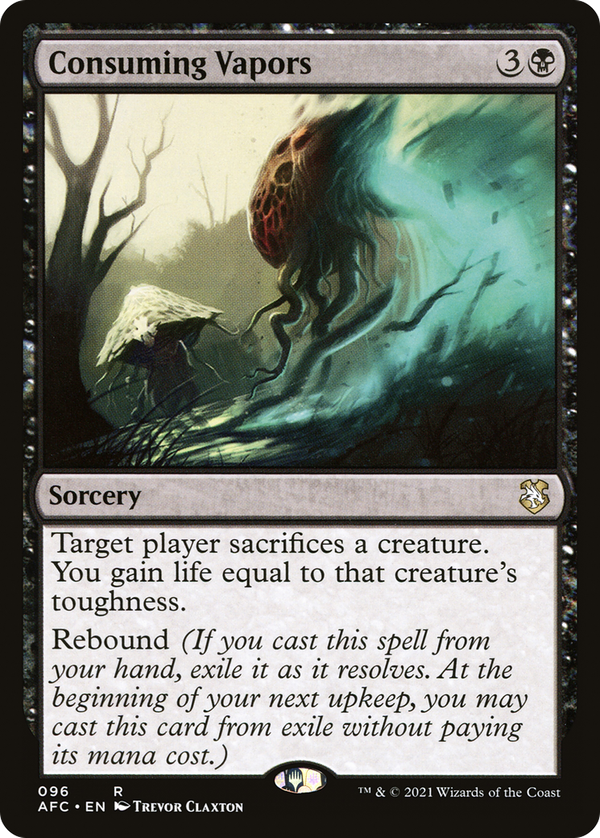
Consuming Vapors


Where Diabolic Edict forces one sacrifice and walks away, rebound turns this into a two-turn tax: cast it from hand, exile it as it resolves, then recast it for free at your next upkeep to force a second sacrifice. That repetition is the whole design. Against a board with a single must-answer threat, you strip it now and strip whatever replaces it next upkeep, before the opponent rebuilds redundancy. The life gain scales to the toughness of the creature the opponent gives up, so when they are forced to feed you a defensive wall to keep their threat, you collect more life than a small body would have paid. The efficiency is bought with tempo and control. The opponent picks what dies, so this never cleanly answers a specific threat the way targeted removal does, and the rebounded half sits idle in exile until your upkeep arrives, useless for a full turn regardless of how the board develops. You are committing four mana and a turn of patience to a removal effect that resolves on someone else's terms, twice. That trade (surrendering choice of target in exchange for repetition and incidental lifegain) is the structural identity of the edict-plus-rebound pairing, and it remains one of the cleaner expressions of the mechanic doing genuine attrition work rather than just stapling a value rider onto a spell.