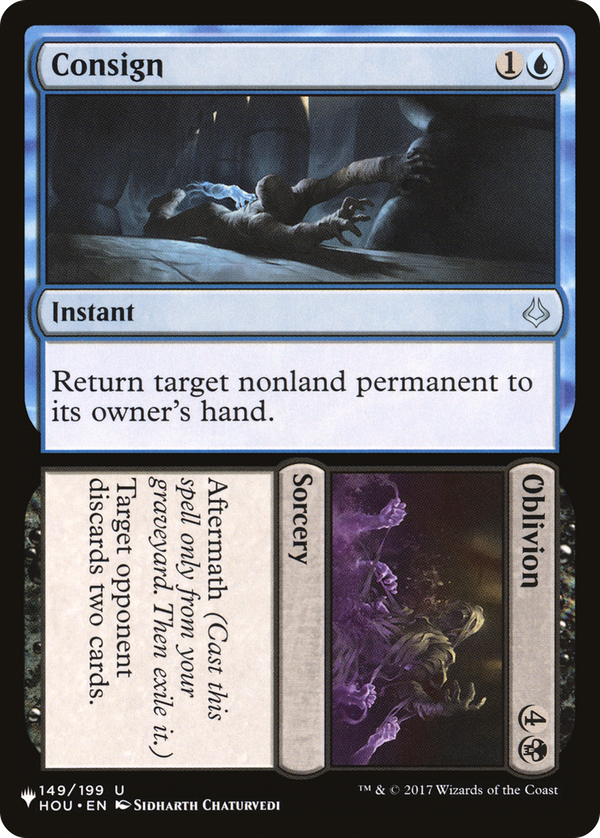
Consign // Oblivion




Aftermath split cards let one piece of cardboard serve two masters on two different clocks, and this Dimir pairing is built to spend value rather than tempo. The front half is a cheap bounce: reset a problem permanent, buy a turn, then move on. The back half is where the structure earns its keep. Discard spells live or die on timing, and the conventional version goes dead late, when an opponent has emptied their hand onto the board. By leaving Oblivion in the graveyard to cast later, you defer the hand attack to whatever moment opens a window: a top-deck war, the turn after a draw step, an opponent refilling from empty. The two halves never compete for a slot in your hand because they can never be cast together; the bounce happens now, the discard arrives on a clock you choose. The cost is steepness on the back end. Paying for a two-card discard is a poor rate in isolation, but the aftermath clause means you have already extracted a turn of tempo from the same card before you pay it, so the discard is priced as a bonus rather than a standalone spell. That is the logic running underneath this whole cycle: the front half subsidizes the inefficiency of the back, and the graveyard becomes a second hand you draw from on your own schedule.