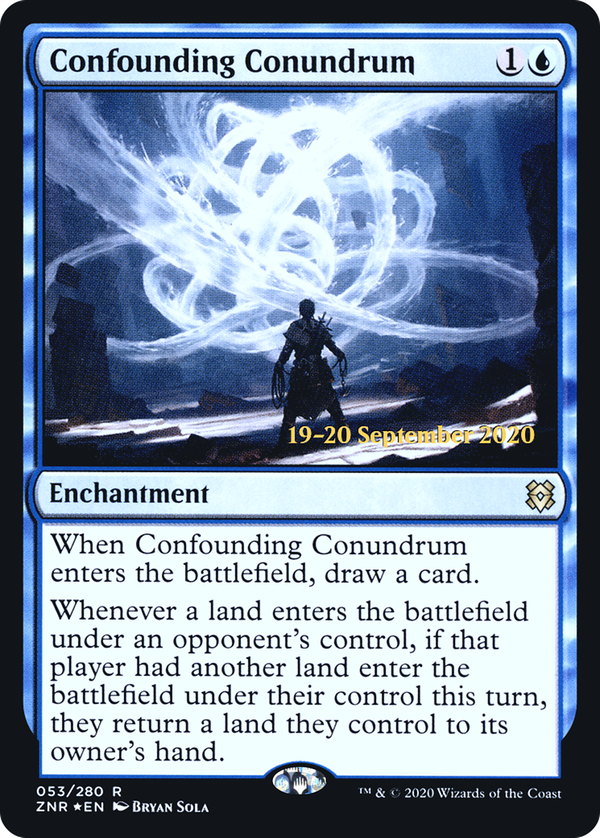
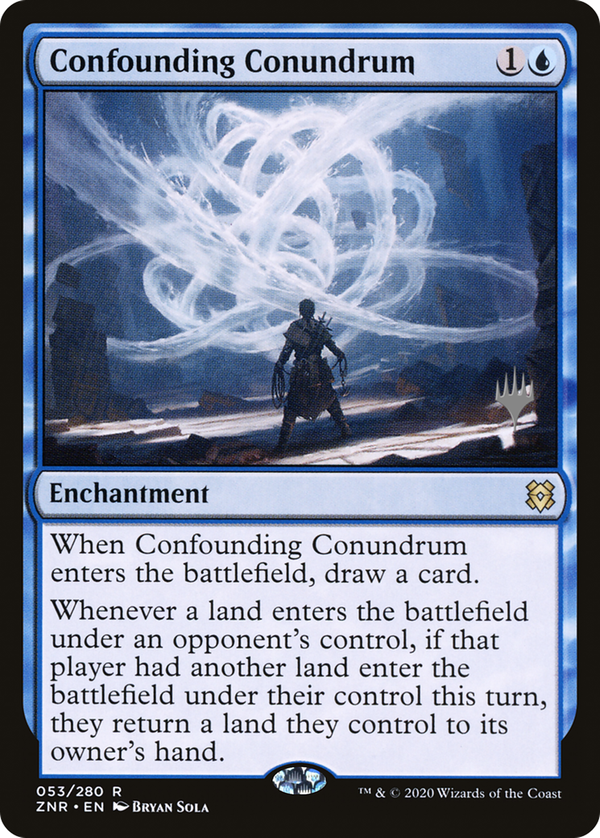
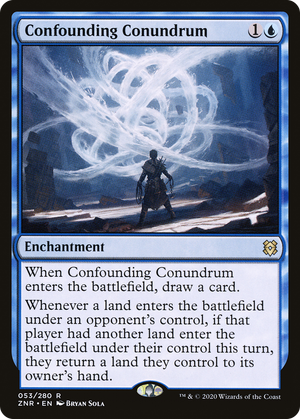
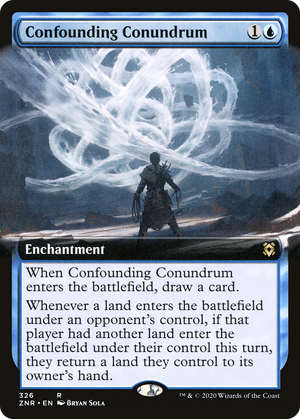
Confounding Conundrum


Blue's answer to the ramp problem has always been indirect: counter the spell, bounce the permanent, tax the mana. This one attacks the pattern instead of the piece. It does nothing to the first land a player drops each turn, which is the fair one; the penalty only lands on the second, the acceleration, and it forces that player to send a land back to their hand. That framing is deliberate. Fetchlands, extra-land-per-turn effects, and the whole family of ramp that lives on cracking two lands in a turn all trip the trigger, and the return clause means the opponent chooses what goes back, so it is a friction tax rather than a hard lock. The cantrip on entry offsets the risk of drawing it against a deck that never overextends its land drops: if the hate misses, you have at least replaced the card. What makes the design worth studying is that it targets a deckbuilding decision rather than a card type. Most stax pieces name a permanent (artifacts, creatures, noncreature spells); this one names a behavior, the act of playing more than one land in a turn, which is a much narrower and stranger thing for an enchantment to police. It sits closer to Ghost Quarter's philosophy of taxing greed than to a conventional taxing enchantment.