Confirm Suspicions


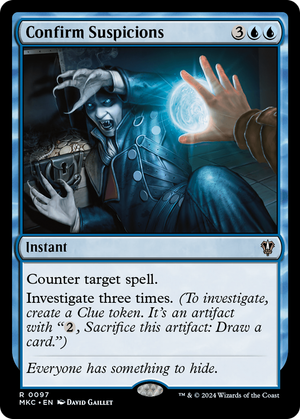
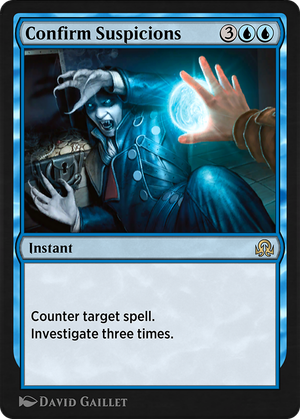
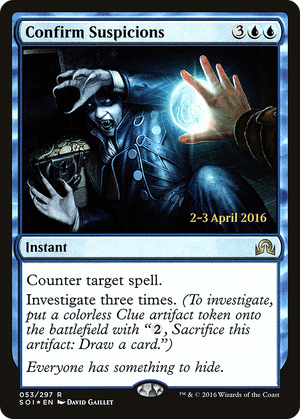
Counterspells have always been priced on a single axis: what you pay, and whether the trade leaves anything behind once it resolves. The genre's problem is that a counter answers exactly one card and then goes dead if the game grinds, which is why the cheap ones tax mana and the expensive ones bundle a rider. Here the rider is three Clue tokens, and the design logic is worth pulling apart. The counter handles the immediate threat; the Clues convert a one-for-one into a deferred three-for-one, but the payoff arrives on layaway. Each Clue must be paid off and cracked before it draws, so the card advantage is real but spread across future turns rather than refilled on the spot. That deferral is what makes five mana for a hard counter reasonable: this is not Cryptic Command's flexibility or a cantrip's instant refuel, it is a permanent stake in the game's back half, cashed in one installment at a time. Control decks built to reach that back half with mana to spare are where three uncracked Clues become a slow, inevitable engine. One condition anchors the whole bargain: investigate is tied to resolution, so if the target spell leaves the stack before this counter resolves, nothing is countered and no Clues appear. The answer and its dividend are welded together; the card-advantage half only materializes when the counter itself lands.
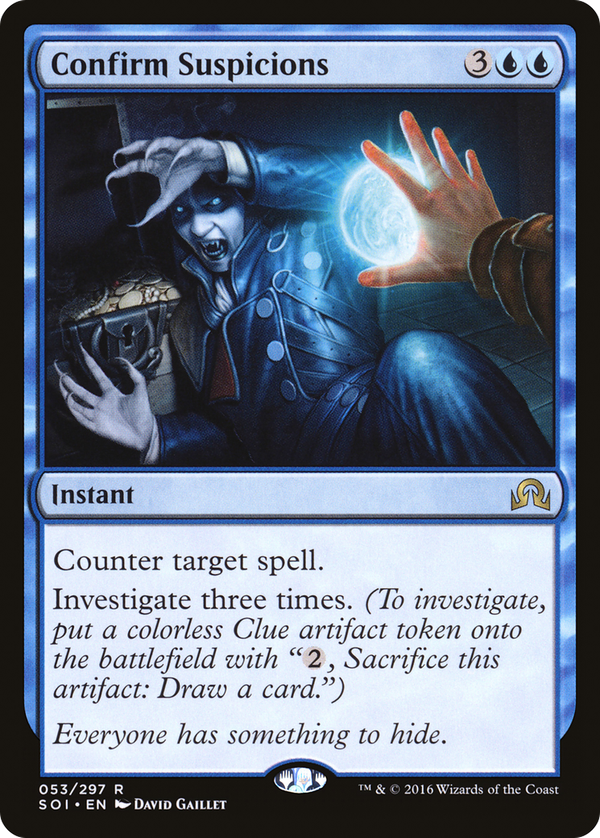
Rules text
 , Sacrifice this token: Draw a card.")