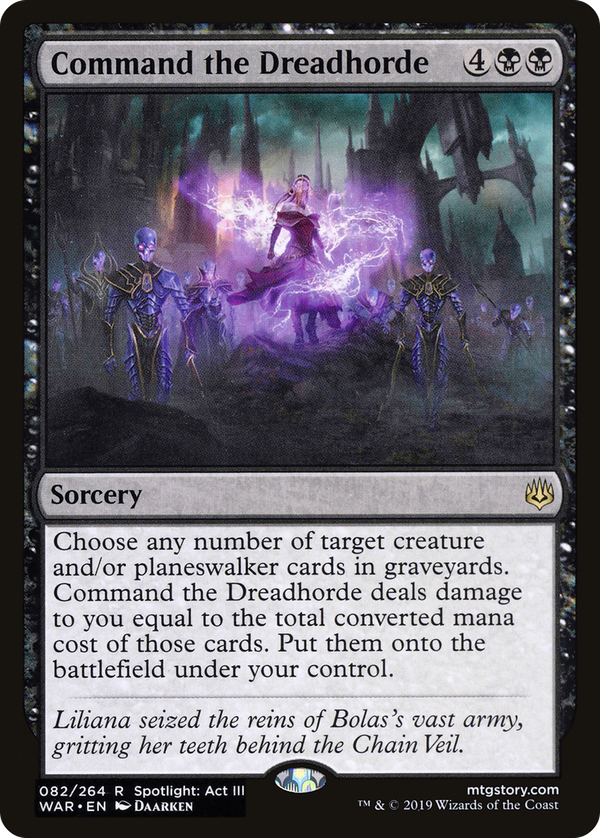
Command the Dreadhorde


Reanimation had always been a color-pie promise about singular power: bring back one enormous thing, pay for it once, and let the body carry the game. This rewrites the contract entirely. The six-mana price gets you into the room; what you owe on the way out is life, scaled to the total mana value of everything you drag back, so the spell asks a different question than any of its predecessors. Not "which creature is worth reanimating?" but "how much of my life total is this whole graveyard worth?" That reframing is what makes it dangerous. A modest board might cost you a handful of life; a full yard of six- and seven-drops, or a stack of dead planeswalkers, converts the graveyard into a mass entrance whose only ceiling is your remaining life. The planeswalker clause is the quietly radical part: mass reanimation had traditionally been a creature-only affair, and folding permanents that arrive with loyalty (and their own repeated payoffs) into the same effect widens the target set well past anything the archetype had touched. The design tension is self-limiting: the more value you extract, the closer you push yourself to zero, which turns lifegain and any way to refill the graveyard into natural partners. It is reanimation reimagined as resource conversion rather than a single silver bullet, trading the safety of mana-locked recursion for a self-imposed payment you can push right up to the edge.