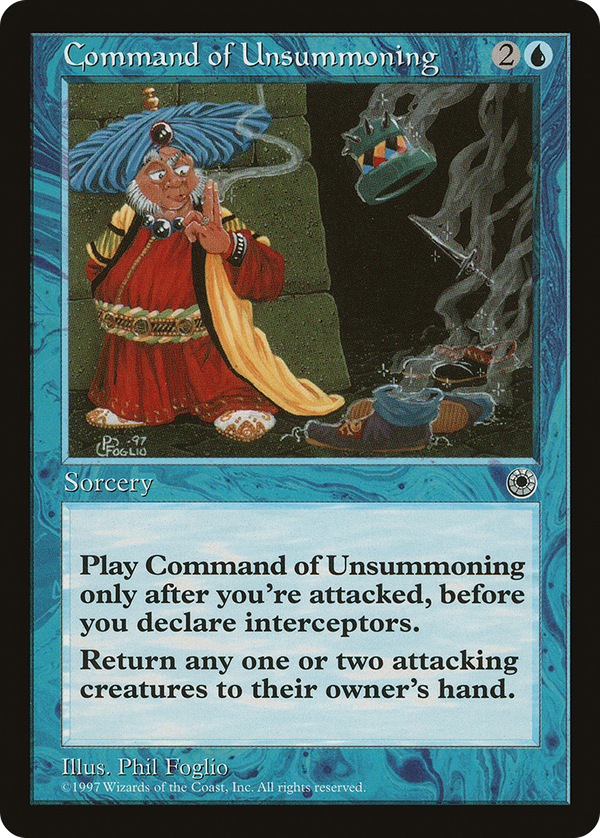
Command of Unsummoning


The timing line is the whole card: castable only during the declare attackers step, and only once an attack has been pointed at you. That clause was a teaching scaffold, a way to bolt a defensive trick to the single recognizable moment when a beginner would understand why they needed it, but it also narrows the spell well past the free-floating bounce of its day. There is no holding it up as proactive tempo, no resetting your own creature in response to removal, no clearing a blocker on offense. It answers one question (the swing arriving right now) at the cost of having already conceded the role of defender. The concession the design hands back is the "one or two" clause: a single card can undo a multi-creature attack. That is a tempo swing rather than card advantage, since the attacker simply reloads both creatures from hand and replays them, so you have bought a turn, not pulled ahead on resources. Set next to a plain Unsummon, this is the same return-to-hand effect wearing a much heavier set of phase-and-trigger handcuffs, and it captures a design instinct that prized unambiguous timing over flexibility. Most of Magic's power lives in the freedom to cast a spell whenever you choose; this card shows what the effect looks like when you strip that freedom down to the one window where its purpose was self-evident.