Codecracker Hound


The interesting thing about a warp cost is what it lets a card do to time. Impulse-style card selection has always been a body's afterthought: a 2/1 that digs two deep and keeps one is a fine tempo creature, but warp splits that transaction across two turns. You can cast it early for the dig alone, take the card, feed the graveyard, and let the creature exile away at the end step, then re-cast it later from exile as an actual creature with its enter trigger firing a second time. Two looks at the top of your deck from one card, at two different moments in the game, on your schedule. That is the mechanical wrinkle warp is built to exploit: it decouples "I want the effect now" from "I want the body later," and the enter trigger doubles because both castings are castings. The filtering itself is honest work, putting one card in hand and the other in the yard, which quietly turns a mediocre draw into fuel for anything that cares about a stocked graveyard. Warp reads like a splashy new toy, but on a card this small it functions as patience made payable: a cheap creature that refuses to commit its full value to a single turn, and rewards you for treating its two halves as separate plays.
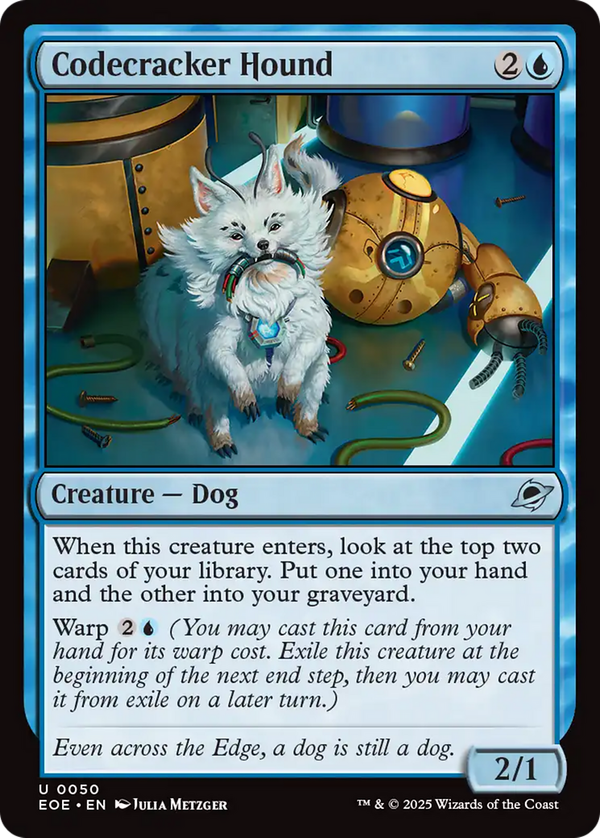
Rules text
(You may cast this card from your hand for its warp cost. Exile this creature at the beginning of the next end step, then you may cast it from exile on a later turn.)