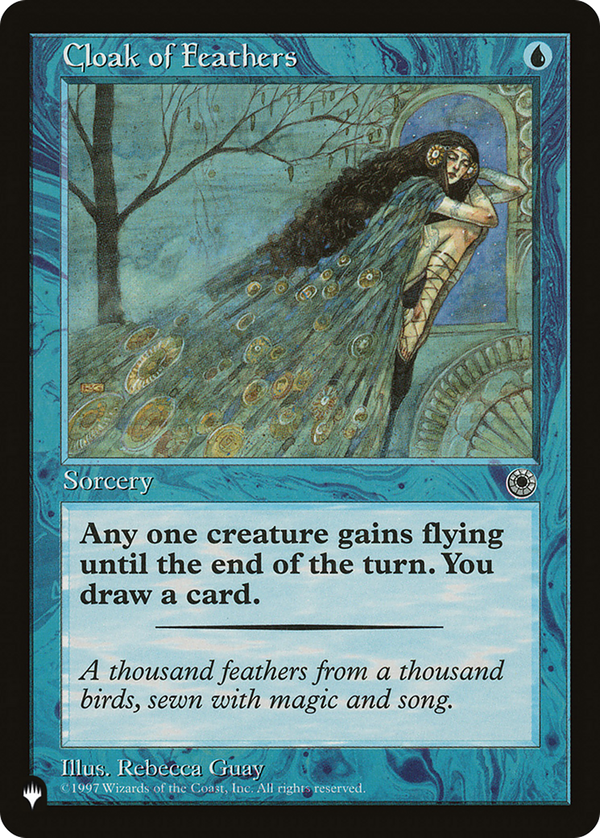
Cloak of Feathers

The flying clause is the tell. Granting evasion works fine before blockers are declared, but a sorcery never lets you respond to a board state mid-combat, so the rider is locked to your own main phase: you decide a creature is flying, then attack with it, and the opponent simply plays around the information they already have. That makes the evasion a feel-good extra rather than a real combat trick, the kind of softened choice a teaching set wants. The body of the card is the cantrip; the flying is window dressing meant to read like a meaningful choice to an audience that did not yet know combat tricks were supposed to be instants. Compare it to the line of one-mana blue cantrips that survived into competitive play: those either replace themselves with no strings, like Opt, or staple the draw onto something the deck already wanted to do. Here the rider points the wrong way, asking the deck to grant flying it has no reason to want. The design shows a beginner that some spells let you keep your hand size while doing a thing, without the thing ever mattering enough to punish misuse. Interesting less for anything it asked a deck to do than for how cleanly it exposes the constraints Wizards built this beginner-facing Magic under.