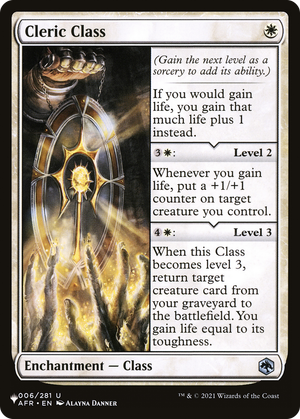
Cleric Class

The base rider pays out per lifegain event, not per point: each time you gain, you gain one extra, which means a deck spraying small, frequent triggers wrings far more from this rung than one that gains in a single large lump. That timing gap is the premise the whole card rests on, and the higher levels exist to turn the resulting surplus into a battlefield presence. Level two converts each lifegain into a +1/+1 counter placed wherever you point it, so the triggers a lifegain deck already produces double as growth for the board. Level three tops the climb with a one-shot reanimation, returning a creature from the graveyard and gaining you life equal to its toughness, which then feeds the counter trigger as that creature arrives. The Class frame is what stretches the curve so unevenly: one white to install, then a steep four and five to reach the second and third rungs, each a sorcery-speed main-phase commitment you telegraph rather than spring. You are not paying up front for a reanimation spell; you are buying a cheap lifegain sweetener and then deciding, turn by turn, whether the gain your deck was already generating justifies the cost of laundering it into pressure. Fully leveled, it is a lifegain-into-counters engine with a graveyard swing on top, and it earns its slots only where lifegain was the plan to begin with.
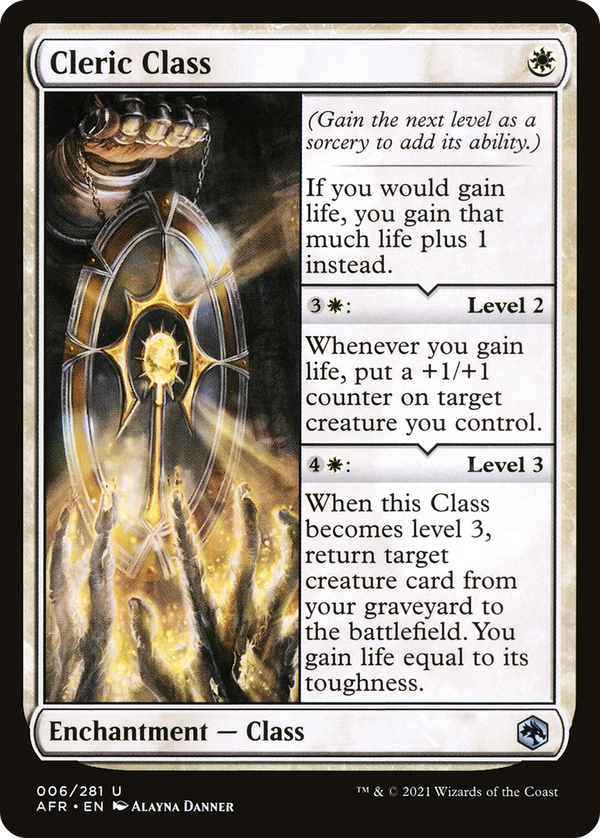
Rules text
 : Level 2
Whenever you gain life, put a +1/+1 counter on target creature you control.
: Level 2
Whenever you gain life, put a +1/+1 counter on target creature you control.
 : Level 3
When this Class becomes level 3, return target creature card from your graveyard to the battlefield. You gain life equal to that creature's toughness.
: Level 3
When this Class becomes level 3, return target creature card from your graveyard to the battlefield. You gain life equal to that creature's toughness.