Clear


Disenchant had taught a decade of players the exact cost of a dead answer: when the opponent ran nothing worth destroying, you held a brick and lived with it. This is the response to that lesson. It narrows the target from "artifact or enchantment" down to enchantment alone, a real concession in flexibility, then buys that narrowness back by letting you pitch the card and draw a fresh one when the matchup offers nothing to point it at. You accept a less versatile answer in exchange for never having to mulligan around its dead weight, since the worst case still replaces itself. The number on the cycling cost matters more than it looks: set high enough that drawing off it reads as a fallback rather than a plan, it keeps players reaching for the destroy mode first and treating the redraw as insurance. This belongs to the lineage of answers that learned to hedge against their own situational nature, the same instinct that later produced split cards and modal double-faced spells. Here the mechanism is just discard-and-draw, but the design question it resolves (how do you make a narrow maindeck answer worth running when half your opponents give it no target) is one Wizards has kept re-solving in every era since.
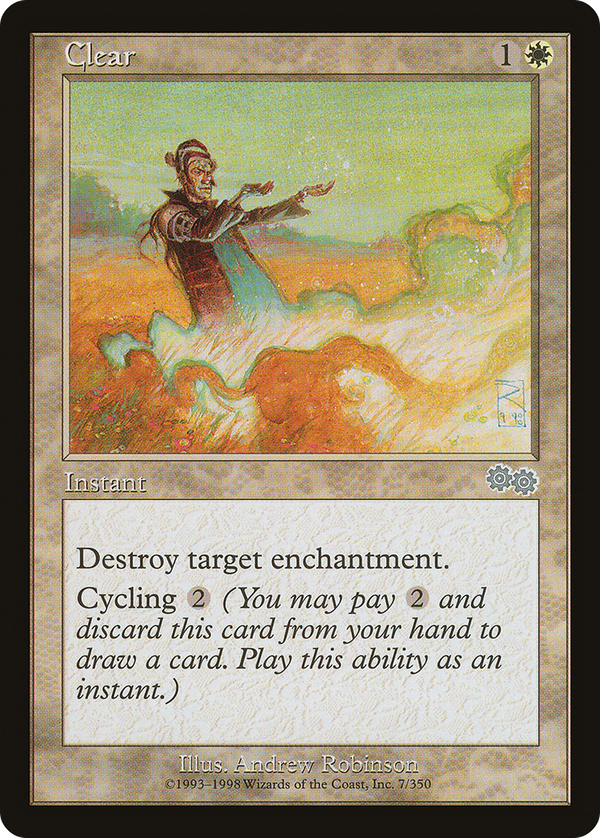
Rules text
 (, Discard this card: Draw a card.)