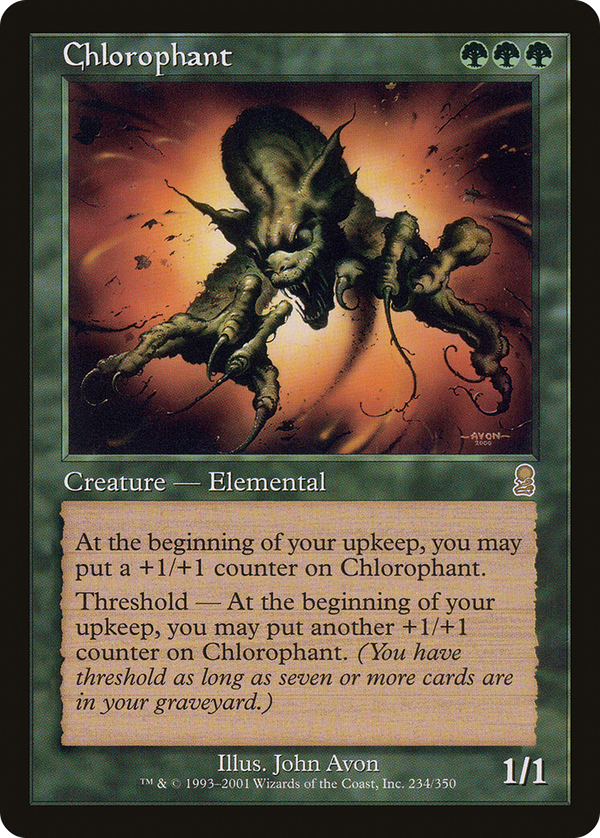
Chlorophant

Triple-green for a 1/1 is a deliberate provocation: the cost is the floor, and the card sits there inert until you've done the work to wake it up. The upkeep counter ticks it one notch a turn unconditionally, which on its own is glacial, a creature that needs four turns just to trade with the bodies it could already block. The threshold clause is where the design actually lives. Once your graveyard hits the magic count, the upkeep trigger fires twice, and the growth rate jumps from arithmetic to something a clock can be built around. That gating is the entire balancing act: the slow mode is the price of admission, the fast mode is what the triple-green pip and the graveyard investment buy you. It rewards a deck already churning cards into the bin (mill, cycling, cheap spells) by turning a dead-weight body into a finisher that outpaces removal-light decks. The catch is that none of it survives a single point of removal: every counter you've banked evaporates with the creature, so the payoff concentrates in one fragile target and asks the opponent to find an answer before the engine runs away. As a graveyard-matters design, it states the threshold thesis plainly: filling your own bin should be a resource decision with a visible reward, not just incidental fuel.