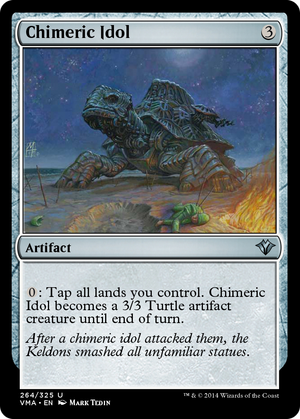
Chimeric Idol

The trick is that the activation costs no mana while the price is paid in board state: tapping every land you control to animate a 3/3 means whatever offense you mount this turn comes out of the same lands you would otherwise spend on spells. The sequencing is more flexible than it looks, since you can tap lands for mana and cast first, then activate for  to wring a body out of whatever remains, but the broad commitment is the same: a turn pointed at the red zone leaves little held back for interaction. The intended home was always a low-curve aggressive shell light on lands, where you cast it early and then tap out each subsequent turn for a body and a swing. Against control it sidesteps the usual creature-removal calculus, because between attacks it reverts to a colorless artifact, sitting outside the range of sorcery-speed sweepers and creature-targeted removal in the windows when it is inert. The design trades mana efficiency for tempo discipline, asking you to convert your land development directly into pressure rather than card advantage. The Turtle creature type is trivia that has outlived the card's competitive relevance, but the underlying idea (a resilient threat that costs no colored mana and refuses to be answered while inert) is one designers have returned to repeatedly under different rate structures and animation costs.
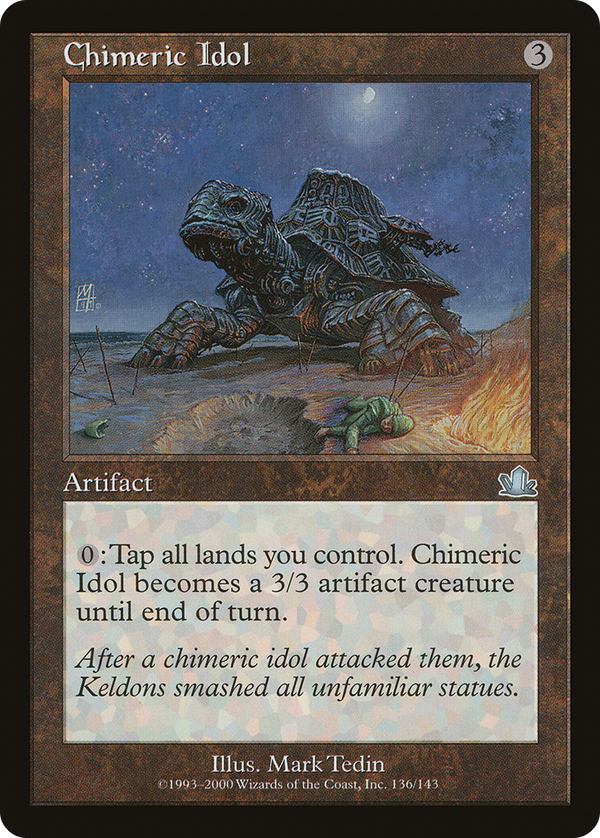
Rules text
: Tap all lands you control. This artifact becomes a 3/3 Turtle artifact creature until end of turn.