Child of Gaea


Seven power of trample for six mana, with the bill coming due every turn on your upkeep: this is the rented-beater design pattern, where the ceiling is real but the lease is brutal. The body is enormous for its era, and the regeneration ability gives it a measure of resilience that most green fatties of the period lacked. But the upkeep sacrifice clause is the structural pressure valve that pays for all of it. Every turn the elemental survives, it taxes you two more green mana just to keep it on the board, and that tax compounds against everything else you want to do: develop, hold up the regeneration, cast a second threat. The card asks whether you can win before the lease eats your whole turn, and in practice the answer is that you need the game nearly over the moment it resolves. Green's design history is full of these Faustian beaters where the drawback scales with how long the creature lives (the upkeep-payment fatties of early sets were a recurring experiment in pricing raw stats against a recurring liability), and this one is among the most demanding: the per-turn green commitment turns a strong rate into a clock that runs against its own controller as fast as it runs against the opponent.
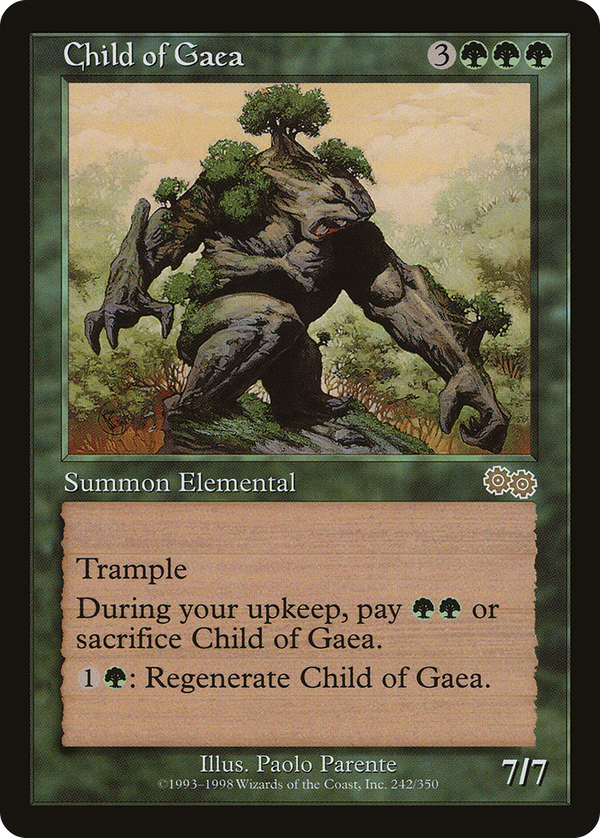
Rules text
.
 : Regenerate this creature.