Charging Binox


A 7/5 trampler with a mana value of eight reads like a top-of-curve haymaker, and in most games it plays exactly like one: slow, clunky, unremarkable. What changes the math is the second player at the table. Assist does not shrink the cost or alter the spell; it lets someone else route up to seven mana into your green haymaker, so the controlling player can drop a single green and still land the body while a teammate covers the rest. A creature priced at the ceiling of the curve arrives turns ahead of schedule when two people pool resources toward it. The trample is doing quiet but necessary work here: multiplayer combat rewards chump-blocking, and a 7/5 that has to grind through a lone 1/1 is far less frightening than one that shoves six damage past it. Strip away the cooperative partner and the card collapses back into what its mana value promises, a lumbering Beast with no acceleration and no second gear. That collapse is honest rather than a flaw: this was never designed to be graded on its own. The whole strategic axis is the social math of a partner willingly paying your bill, and when nobody wants to, the card has nothing else to offer.
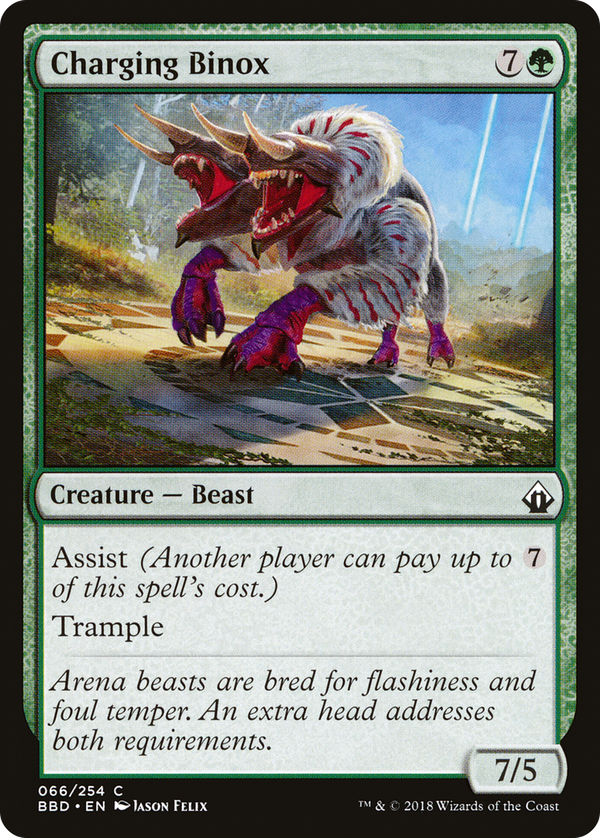
Rules text
of this spell's cost.)
Trample