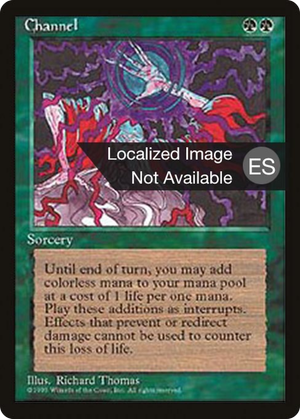
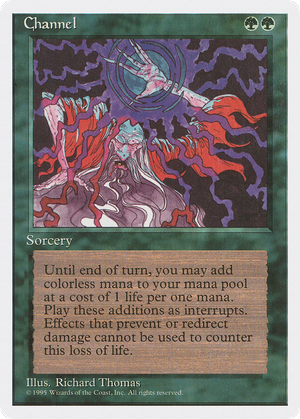
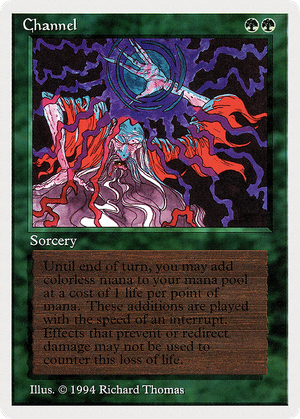
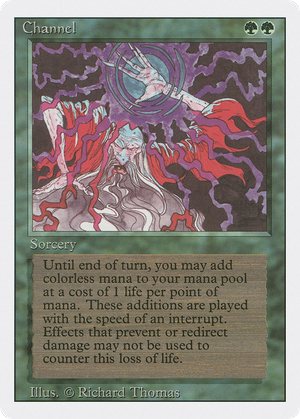
Channel

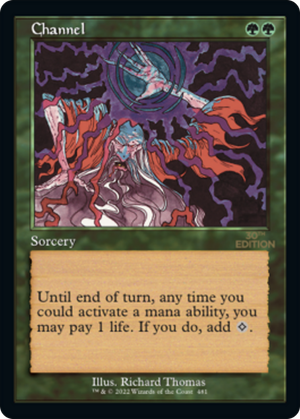
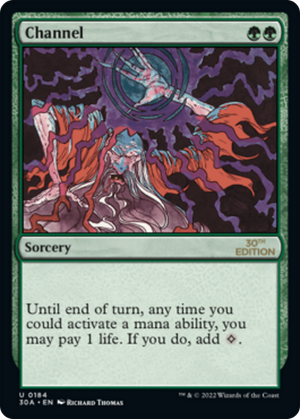
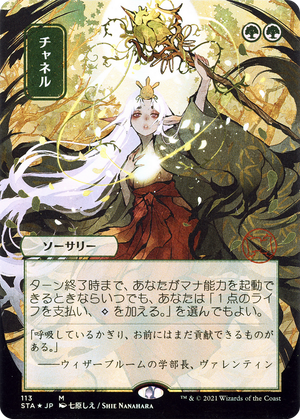
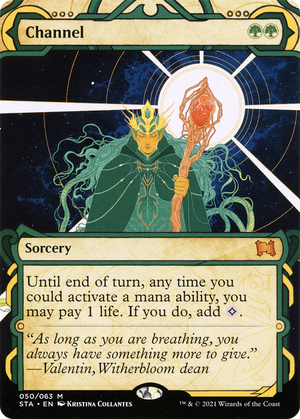
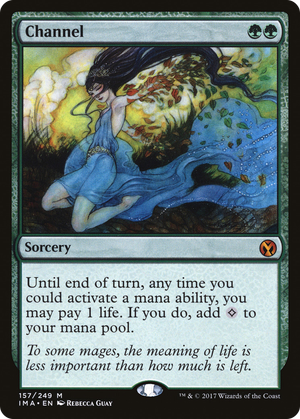
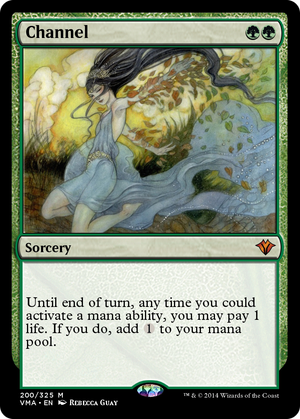
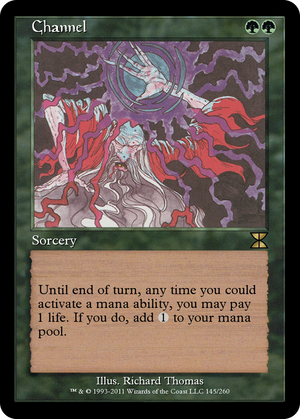
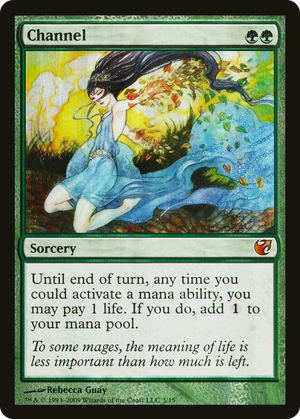
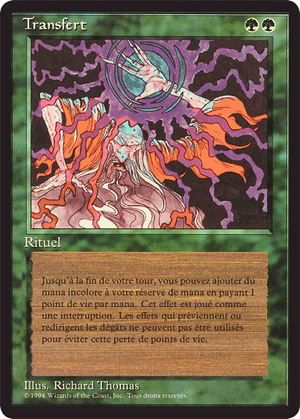
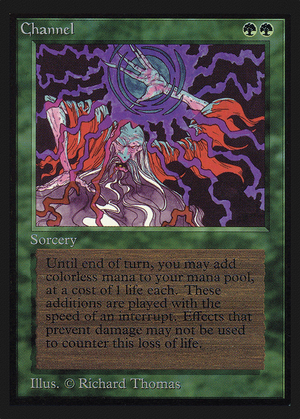
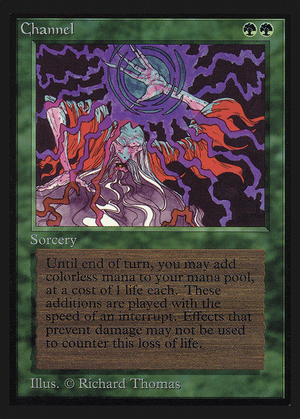
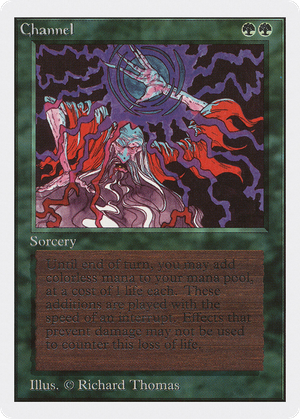
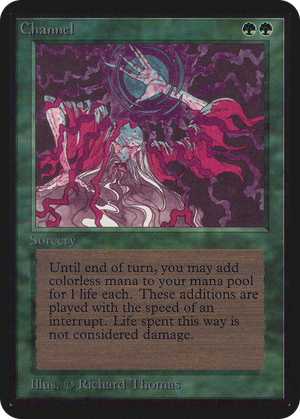
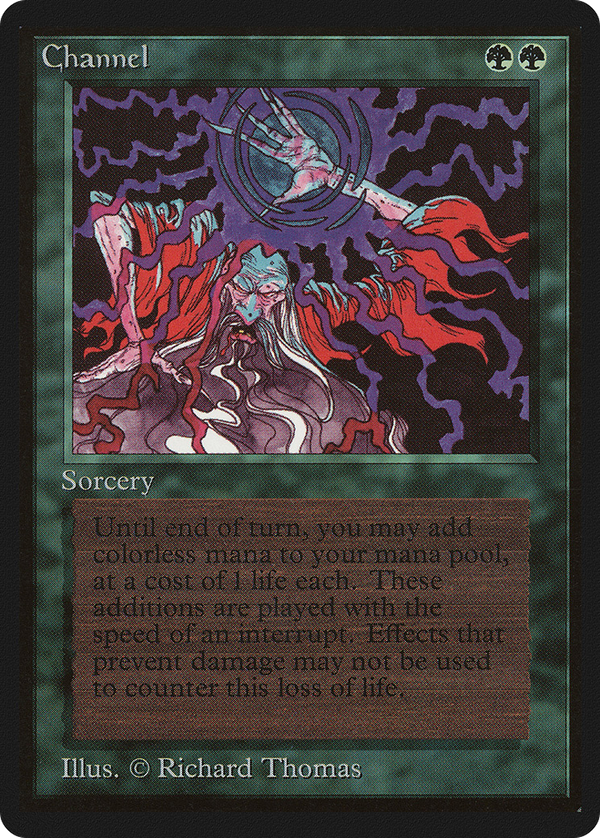
Life becomes mana at a flat one-to-one rate, but the conversion ratio was never the point. What made this card a problem is the shape of the permission it grants: instead of tapping a permanent for a finite burst, it installs a payment window that lasts the whole turn, available any time you could activate a mana ability. And the payment itself is a mana ability, which is exactly why it is so dangerous; it resolves immediately without using the stack, with no cap, no limit on how often you pay, and no requirement that the resulting colorless go anywhere in particular. Channel is the engine, not the fuel, and what it needs is a sink large enough to absorb the output. Fireball is the canonical one, and the Channel-Fireball kill is the textbook expression. But the card's real legacy is structural: it proved that "pay life for colorless," written as a recurring window rather than a single tap, is functionally an unbounded mana source bounded only by how much life you are willing to spend. Every life-for-mana design that followed has been priced against the lesson Channel taught, which is that a mana ability open all turn is a different animal from a one-time burst. Restricted where it is legal and unwelcome almost everywhere else it could appear, it remains a card whose power lives in its grammar rather than its numbers.
Rules text
 .
.