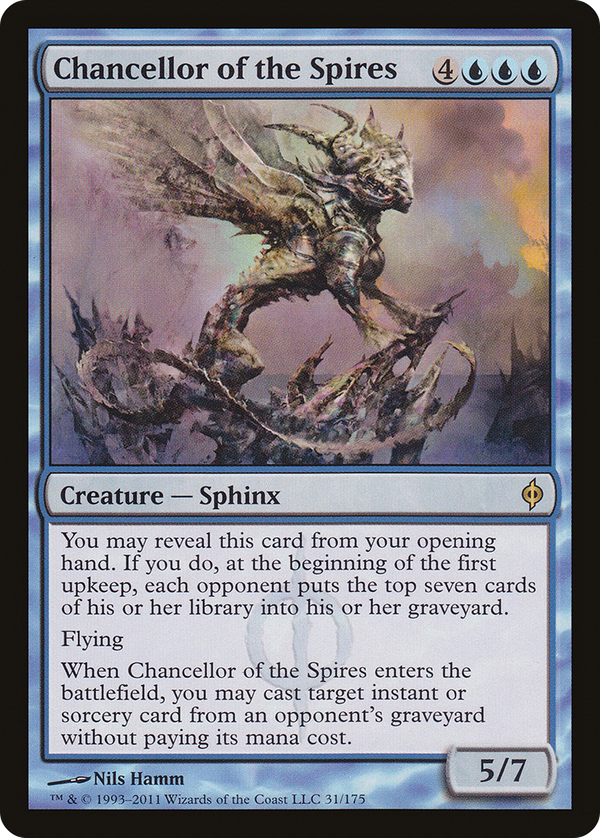
Chancellor of the Spires


A theft card that fills the graveyard it intends to rob, before the game even starts. The opening-hand reveal mills each opponent seven on the first upkeep, and the point is not disruption: it is stocking an opponent's bin with instants and sorceries you plan to take later. The 5/7 flier is the payoff, casting one of those spells for free when it enters, and the early mill makes it likely there is something worth stealing even against a deck that would never have discarded a card on its own. That is the closed loop most theft effects never manage. Praetor's Grasp reaches into a library blind and hopes; here you seed the yard yourself and pick from it on resolution. The tension lives in the gap between the two halves. The reveal is a turn-one commitment with no board impact: the card stays in your hand, but you broadcast its arrival seven turns early and gain nothing tangible until you have paid the full seven mana to deploy it. Plenty of games end before the second half ever fires, which makes the reveal a speculative investment rather than a reliable engine. What the design represents is self-mill turned outward: a sphinx that builds an opponent's graveyard so it can plunder it, asking you to commit to the heist before you have drawn a single card.