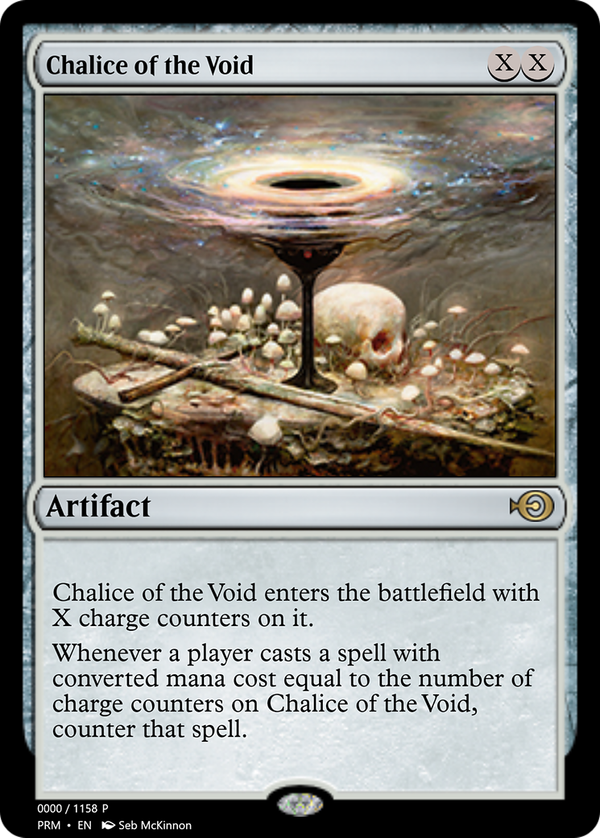
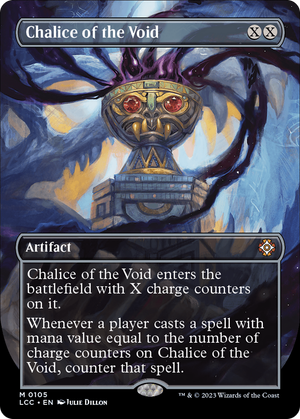
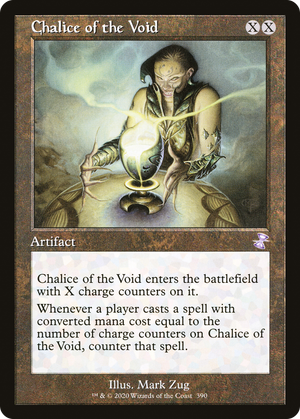
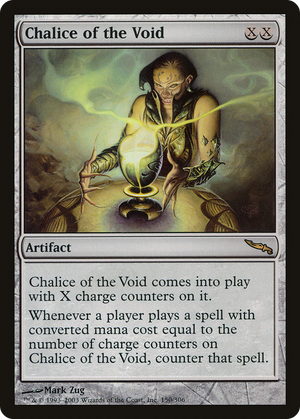
Chalice of the Void

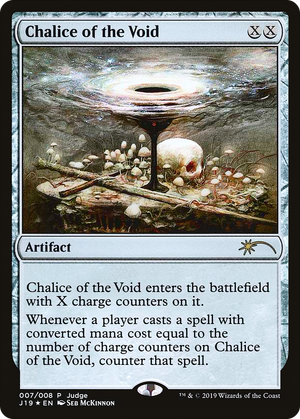
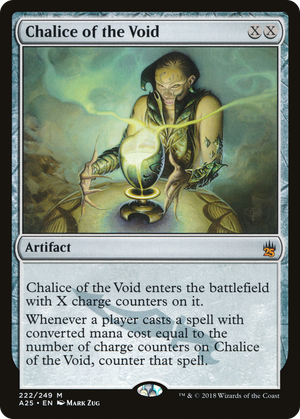
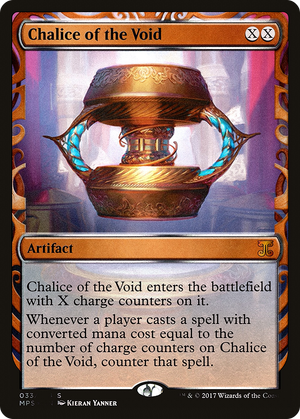
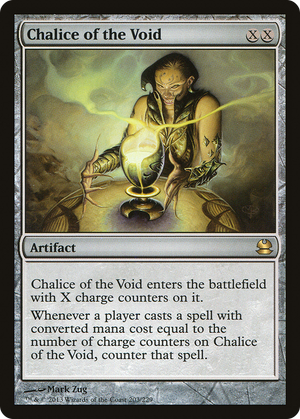
A symmetrical wall with a dial. You set X on cast, and from then on the artifact counters every spell whose mana value equals the number of charge counters sitting on it: yours as readily as the opponent's. That even-handedness is what keeps it precise rather than oppressive. Set the counters at one and you lock out the cantrips and one-mana accelerants that grease combo and tempo openings; set them higher and you start clipping your own curve. The whole design tension lives in the chosen number, and the way to build around it is to simply refuse to play at the contested cost. The mechanism is a triggered ability, not a tax: the offending spell still goes on the stack, targets get chosen, cast triggers fire, and only then does the artifact's trigger go on top and counter it. So it answers the spell on cast rather than letting it resolve, but it does not bypass the stack: it can be responded to, and a spell that has already resolved is past saving. That makes it a structural answer aimed at a specific rung of the curve, but one you still have to cast and resolve like any other artifact, which means a pilot has to decide which cost to police while their own hand pays the same toll.
Fair decks have spent the better part of two decades learning to route around it, treating it as a load-bearing check on degenerate one-mana starts that a grindier deck can usually afford to ignore. The cleverness of the charge-counter framing is that one card polices a different slice of the field in every matchup, depending on what its pilot most needs to stop.