Chain of Acid


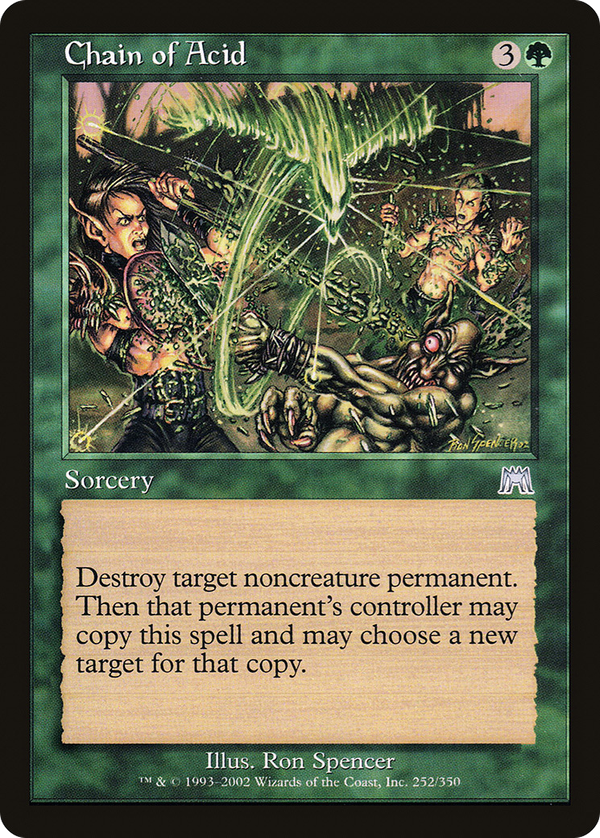
The Chain cycle's whole conceit was a Naturalize that hands your opponent the leftover ammunition: destroy their noncreature permanent, and they may copy the spell and aim it at one of yours. Green's entry got the wide remit, hitting any noncreature permanent (artifacts, enchantments, lands), and that breadth is precisely what gives the give-back clause its teeth. The opponent's copy is not a courtesy: it is a real spell on the stack pointed at your stuff, and they choose the target. The design tension is whether the asymmetry favors you. It usually does when you have nothing comparable to lose, when their permanent is worth more than whatever they can retaliate against, or when the copy fizzles because they have no legal target you care about. The "may" matters too: they can decline, so a player who would only be helping you by chaining simply stops the chain there. That single-target, sorcery-speed disenchant-plus-rider was a strange creature to hang on green, a color that traditionally got noncreature destruction through brute artifact-and-enchantment hate rather than open-ended removal. As disruption it reads worse than it plays, because the copy is opt-in for the opponent and the value swing depends entirely on the board state when you cast it. The scary-looking template promises a chain reaction; the quieter reality is a Naturalize whose rebound clause often does nothing at all.