Cephalid Shrine


Most stax pieces tax mana flatly: every spell costs more, every dork pays the same toll. This one taxes redundancy instead. The price of any spell scales with how many copies of that exact name have already gone to a graveyard, which means it does almost nothing across a varied spread of singletons and becomes a wall the moment a deck leans on a four-of. Burn casting its third Lightning Bolt, a control deck recurring the same removal, a combo line that loops one piece: those are the players who suddenly cannot pay. It is a tax aimed squarely at the deckbuilding habit that makes a deck consistent, punishing the player who streamlined hardest. The symmetry is real but rarely felt evenly, because the deck that built around naming-diversity barely notices and the deck that drew its plan from four copies of one card is the one that grinds to a halt. That graveyard-counting clause also makes it a slow ratchet rather than a fixed cost: the longer a game runs and the more identical spells get answered, the heavier the tax climbs, so it gets meaner the deeper a redundant deck goes. A strange, lopsided answer to consistency that reads like a curiosity and lands like a hate card against anyone who built efficiently.
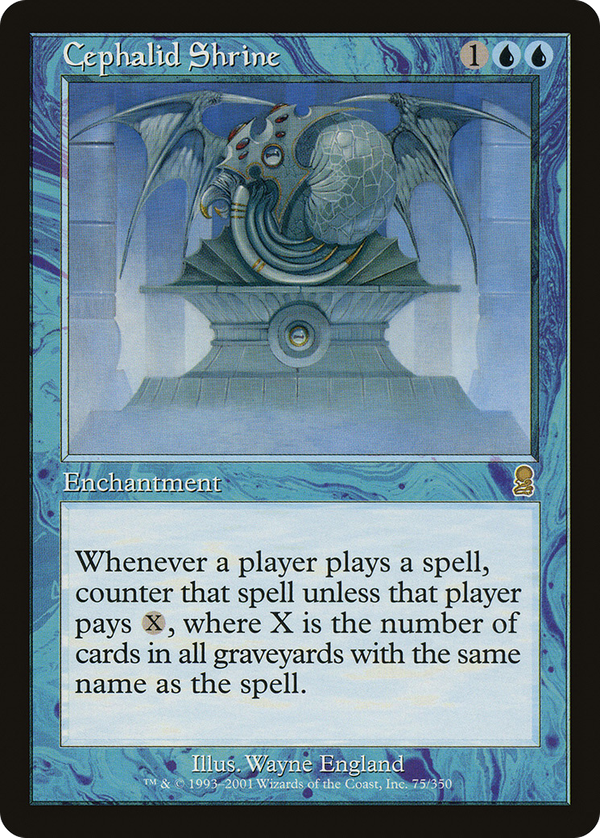
Rules text
 , where X is the number of cards in all graveyards with the same name as the spell.