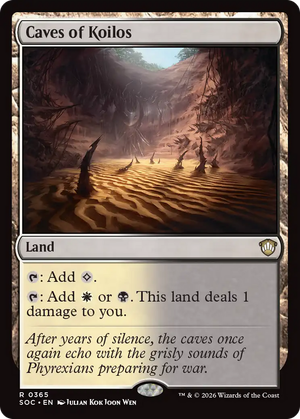
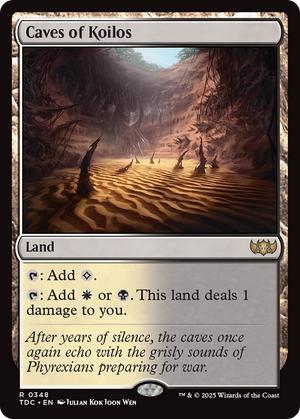
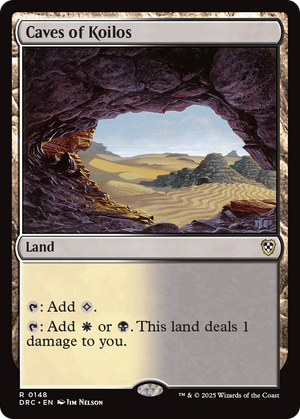
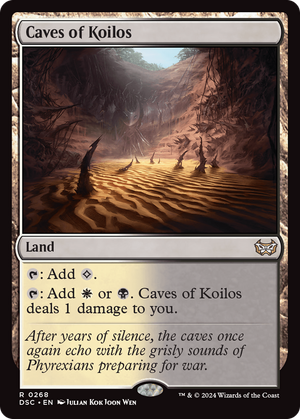
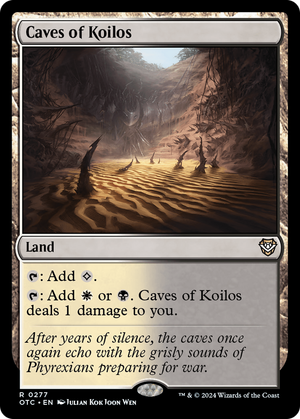
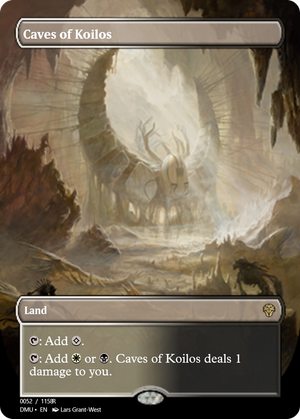
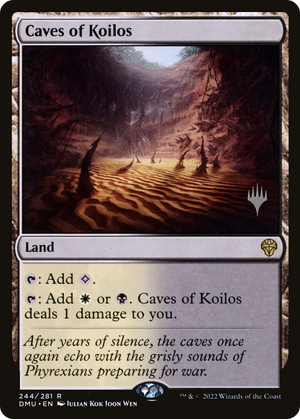
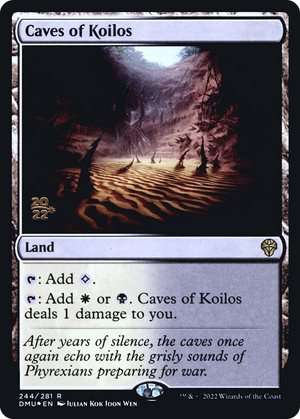
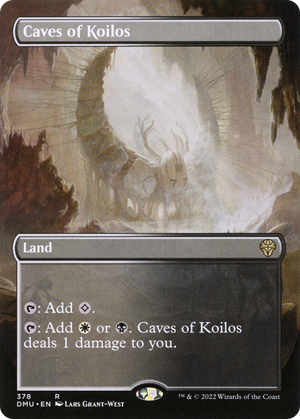
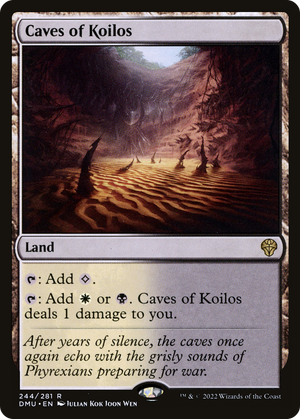
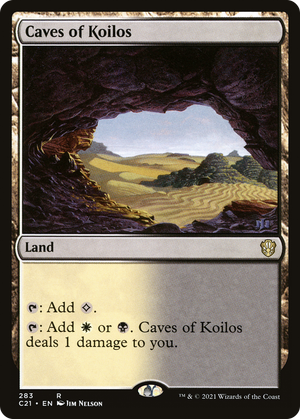
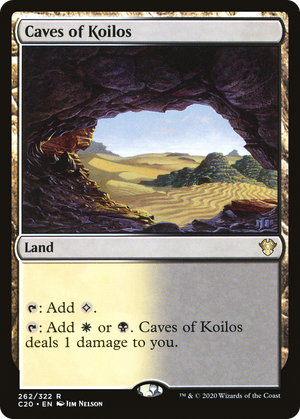
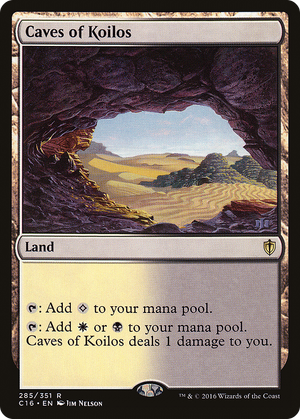
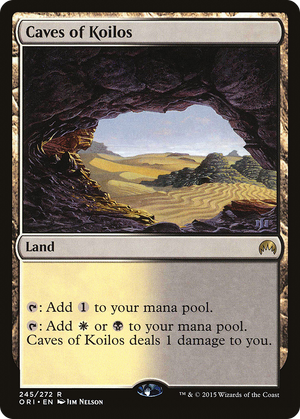
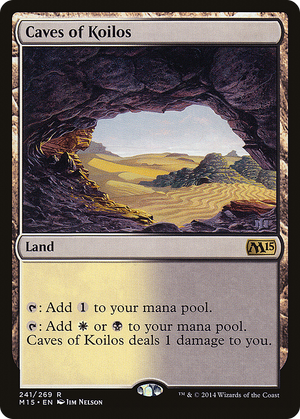
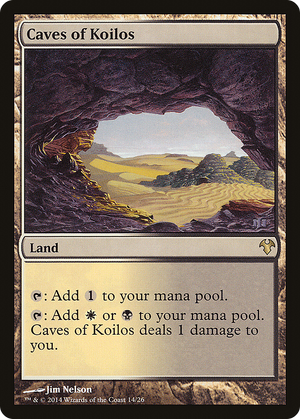
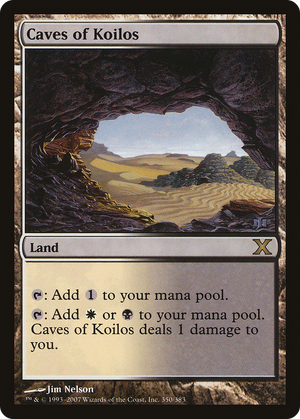
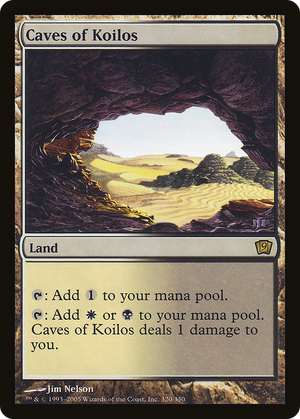
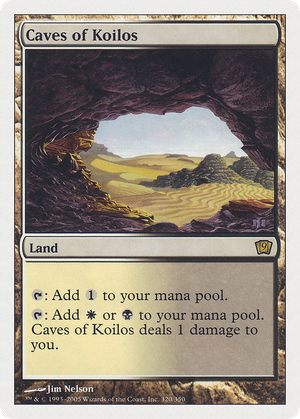
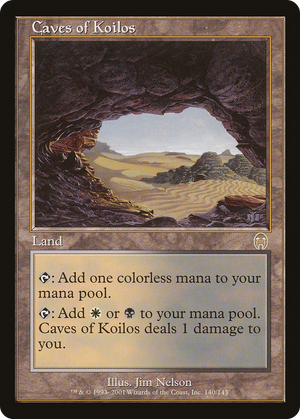
Caves of Koilos
White-black was the late bloomer of the allied/enemy color pairs: the two colors share a graveyard-and-attrition philosophy but were rarely jammed into the kind of tight, untapped curves that demand a dual land. This enemy-color slot is where the painland design pays off, because it gives those decks an untapped source of both colors when they otherwise had to choose between speed and consistency. The colorless option is the part people forget: tapping for  costs no life, so the land goes dormant the moment a generic mana point will do. That clause carries the whole design. A painland is a dual that punishes you only when you actually need both colors fast, and stops asking once your colored requirements are met. It pays its rent in early-game life, exactly when a deck is racing close enough that single points start to add up against burn, reach, or its own fetch-and-shock manabase; later, it leaves you alone. The damage is small enough to ignore in a vacuum and large enough to matter across a whole game, which is why this family of lands has stayed a fixture of two-color manabases for over two decades rather than getting power-crept into irrelevance. The genius is that the cost falls precisely where flexibility is worth the most: the turns you most want both colors are the turns you can least afford to play a tapland instead.
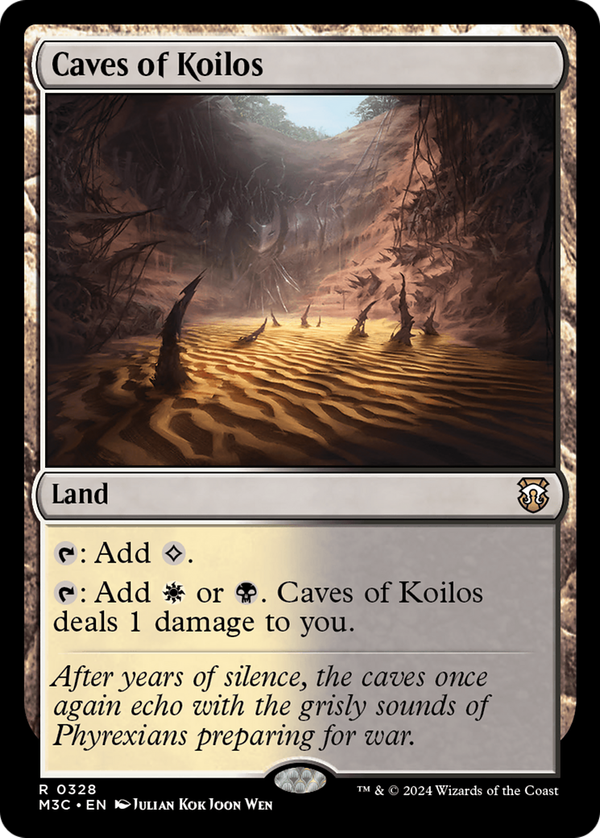
Rules text
 : Add .
: Add
: Add .
: Add  or
or  . This land deals 1 damage to you.