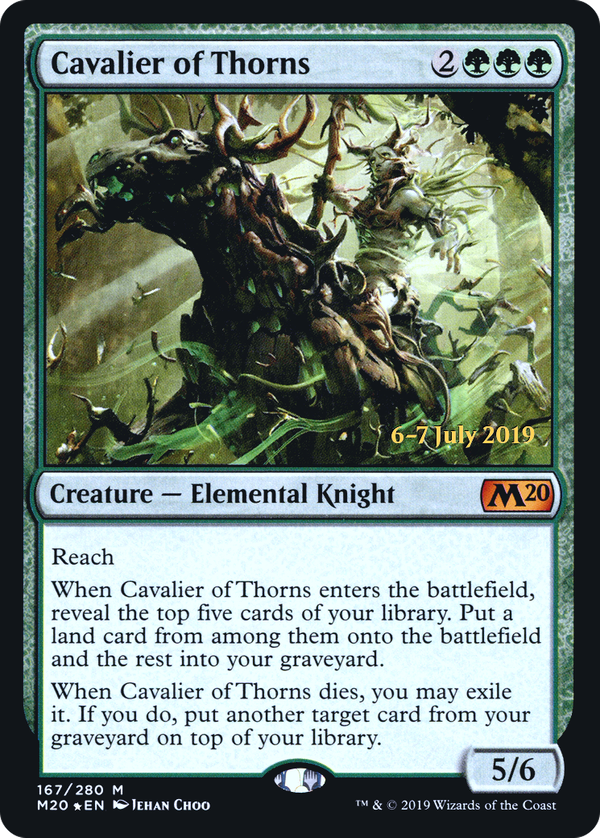
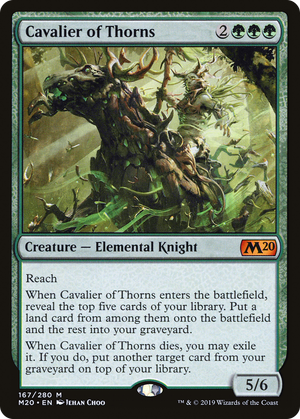
Cavalier of Thorns


The design puts the value on both ends of the creature's life. The entry trigger reveals five, keeps a land, and dumps the rest, which usually means four cards into the graveyard dressed up as ramp; in the rare case the top five are landless, you mill all five and take the fixing loss, but you have still stocked the yard for what comes next. That framing matters because the second half turns the graveyard from cost to arsenal. Where most self-mill effects ask you to swallow the bin as a downside, this one wires the mill directly into the payoff: exile the body on death and put any card from your graveyard back on top of your library, and the cards you discarded on the way in become a toolbox you draw from. A board wipe, a bomb, a second copy of the creature: its death hands one back. The 5/6 with reach is a stubborn wall in the meantime, blocking fliers and ground threats alike, so the front half holds the line while the back half rebuilds the plan. Note the friction that keeps it from looping trivially: the death exile is optional and the target must already be in your graveyard, so each death is a read-your-best-card decision rather than a fixed engine. It sits in a lineage of green creatures that convert library churn into inevitability, but few of them do their most important work after they die.