Cauldron Dance



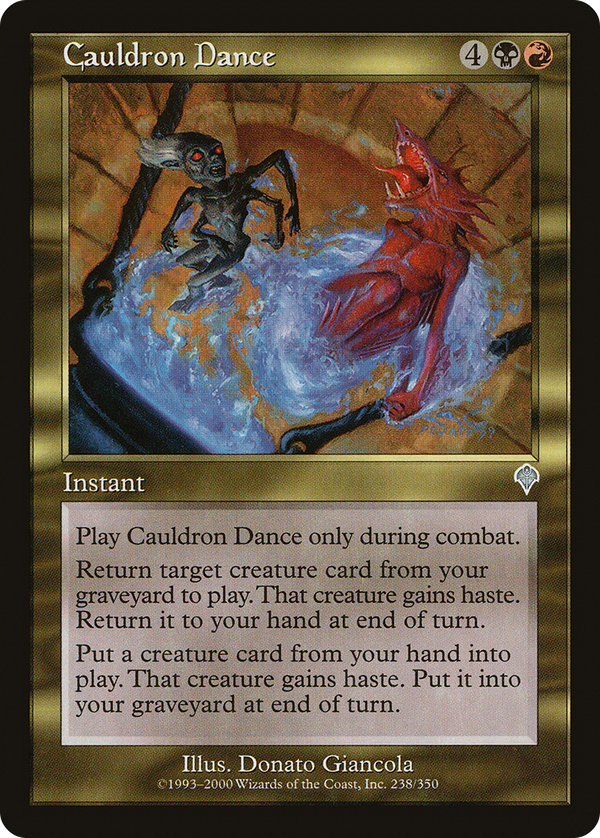
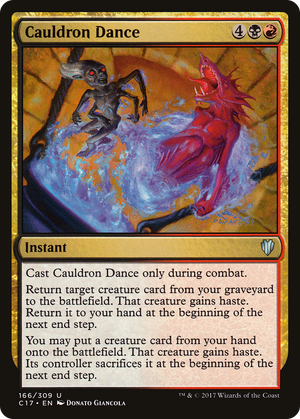
The "cast this spell only during combat" clause is the whole engine, and it routes the card toward a single job: ambushing a combat step with two bodies that appear out of nothing. Both halves grant haste because both are built to act the turn they resolve and then unwind when the turn closes; the graveyard half bounces its creature back to your hand (so you keep the card and any enters-the-battlefield trigger you wrung from it), while the hand half rents a fresh creature for one combat before its controller sacrifices it. The result is two attackers or two blockers conjured purely from your own resources. That self-sufficiency is the underrated part: pulling one creature from the yard and one from the hand, it does not lean on an existing board to matter. As the aggressor, you fire it before declaring attackers, ahead of any blocking math, and swing with reinforcements your opponent never saw on the table; as the defender, you wait for the attack and drop two surprise blockers into a step that looked safe. The six-mana, double-pip cost and the awkward "two cards stapled together" feel are the toll for that flexibility: a blowout trick that wants a creature to reanimate and a creature to spend, not a steady value engine. Built for the swing that ends a game, not the one that grinds it out.