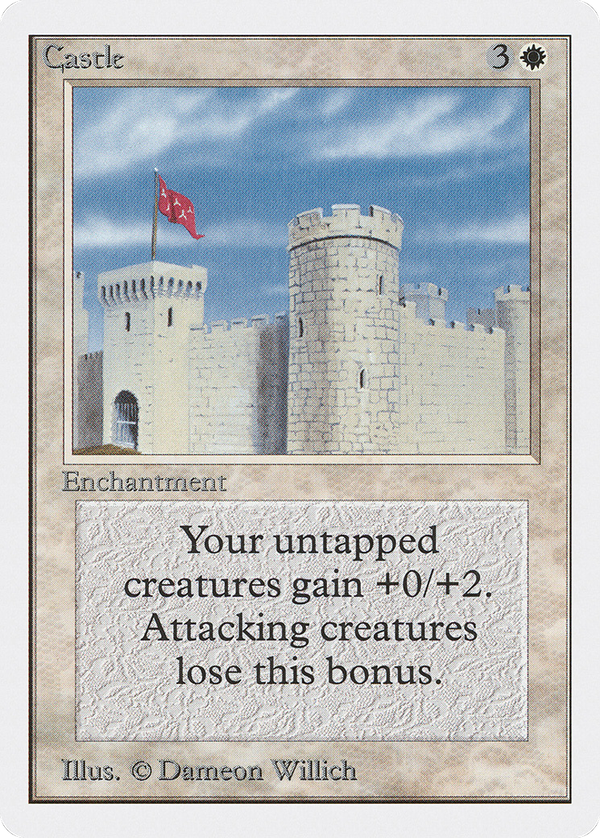
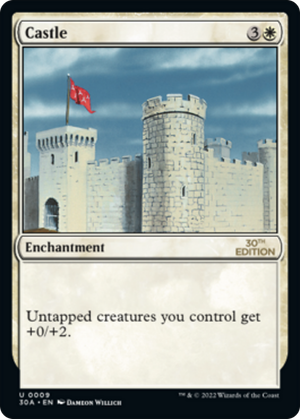
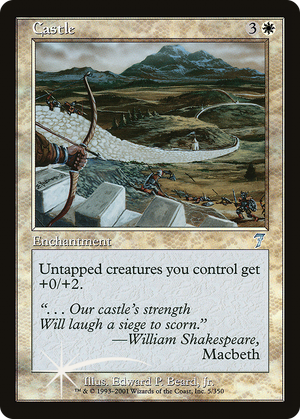
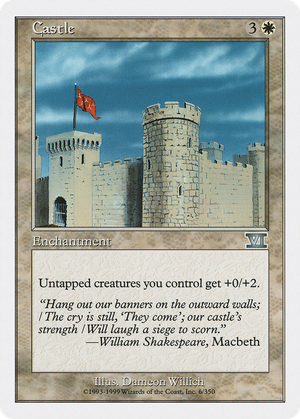
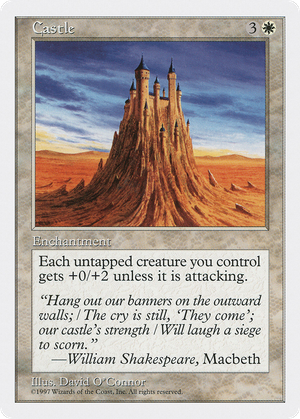
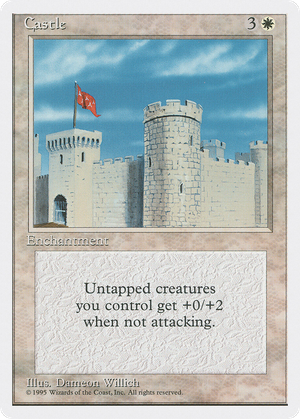
Castle


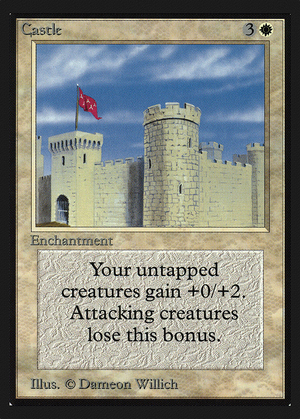
The mechanical conceit is the tap-state toggle: a static buff that only applies while your creatures are untapped, which means the bonus evaporates the moment they swing. Read as a defensive tool, it is coherent: your blockers stand taller, your attackers do not. The problem is that toughness-only pumps in white were already cheaper and cleaner by the time the game found its footing, and the early instinct to gate effects behind awkward state-checks did not survive Magic's first few years. What the card represents now is a design fossil: an enchantment that costs four mana to do less than a one-mana combat trick, built around a restriction (untapped-only) that later designers learned to either embrace as a real cost or drop entirely. It reads as an early, hesitant attempt to price a permanent buff, from a time when the calibration of what a battlefield-wide effect was worth had not yet settled and the color pie itself was still provisional. Castle is worth a second look precisely because the restriction has aged so visibly; it shows a design team finding the edges of a mechanic before they knew where those edges should be. The untapped clause is the whole story, and it is the friction the team would soon stop charging full enchantment price for.