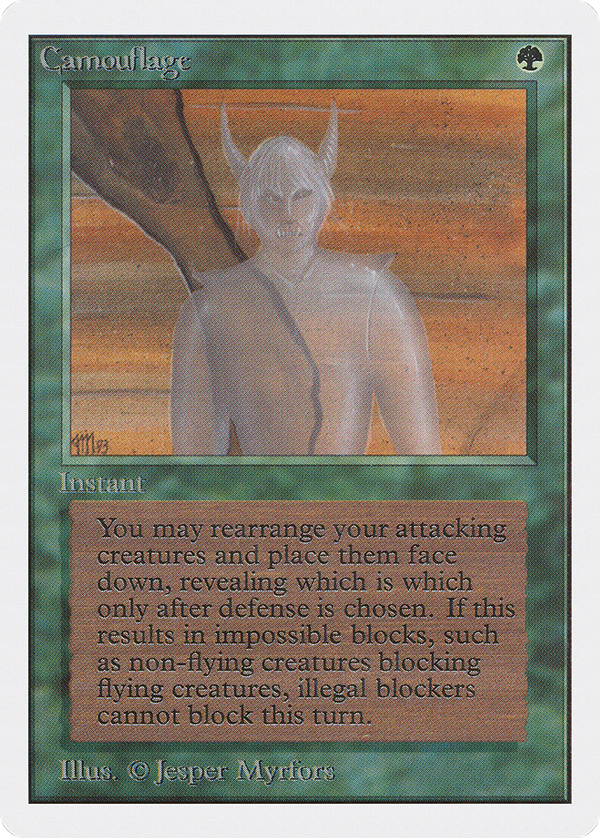
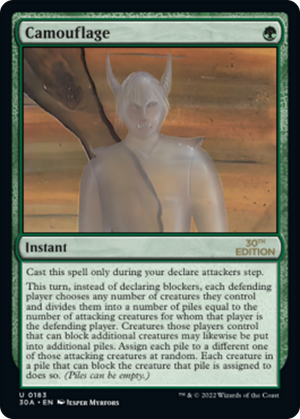
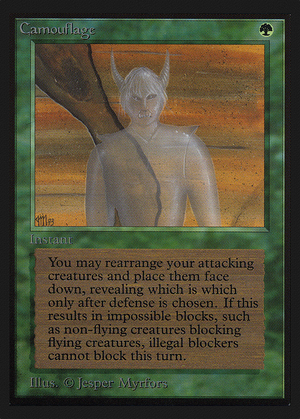
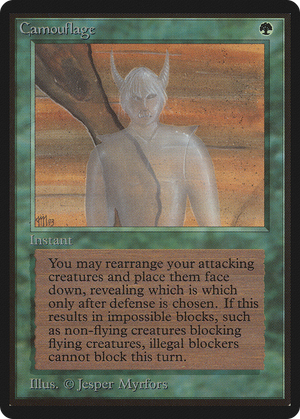
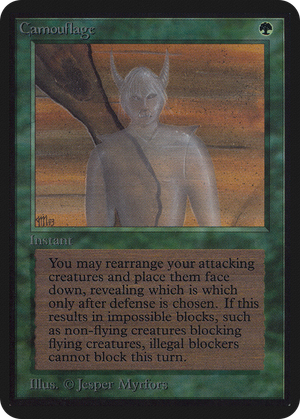
Camouflage

Hand a green instant to a defender and ask them to perform a randomization procedure at the table: pile their blockers, assign the piles to attackers by some agreed-on random method, and let chance resolve who actually trades. Nothing else in the modern game works this way, because nothing else in the modern game is willing to surrender a combat resolution to luck after attackers are locked in. The design intent is legible enough (a trick that punishes the defender for fielding a wall of blockers by scrambling their assignments), but the execution comes from an era when "divide into piles" and "at random" were considered acceptable instructions to print on a card. The templating alone is a small monument: the current Oracle text runs longer than most planeswalker ultimates, and it is still ambiguous enough that serious play would never tolerate it. What Camouflage really represents is the path not taken. Combat tricks consolidated around deterministic effects (pump, evasion, fight, trample-granting) and left randomization behind entirely. The card endures as a curiosity and a reminder that the trick-color's role in combat was, for a brief window, an open design question rather than a settled one.