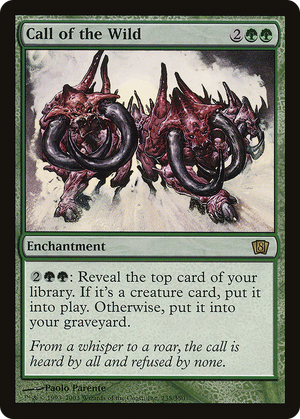
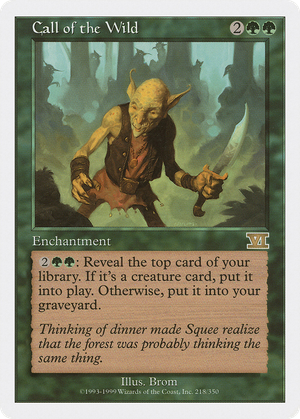
Call of the Wild


Pay four mana to flip the top card of your library face up, and one of two things happens: a creature drops onto the battlefield for free, or anything else hits the graveyard and is gone. The design lives entirely on that reveal. You are not drawing the card, you are gambling it, which turns the enchantment into a referendum on how you built your deck rather than a source of raw card advantage. Stack the library with nothing but fatties and every activation lands a body; run a normal curve and you are mostly milling yourself for a coin-flip chance. The card rewards a creature-dense build and punishes the diversified one, and because the activation cost is steep and repeatable, it wants a slow green ramp shell with the mana to fire it again and again across a long game. The payoff is direct in a way later library-digging green engines rarely matched: skip the casting cost, skip the mana value, drop a threat for a flat fee. That graveyard outcome is the cost of admission; every miss is a card permanently lost, so the engine only pays off for a player willing to warp the deck toward creatures until missing becomes rare. This is a builder's card, not a goodstuff one, and it reads exactly the way green's early library-as-resource experiments were meant to read.
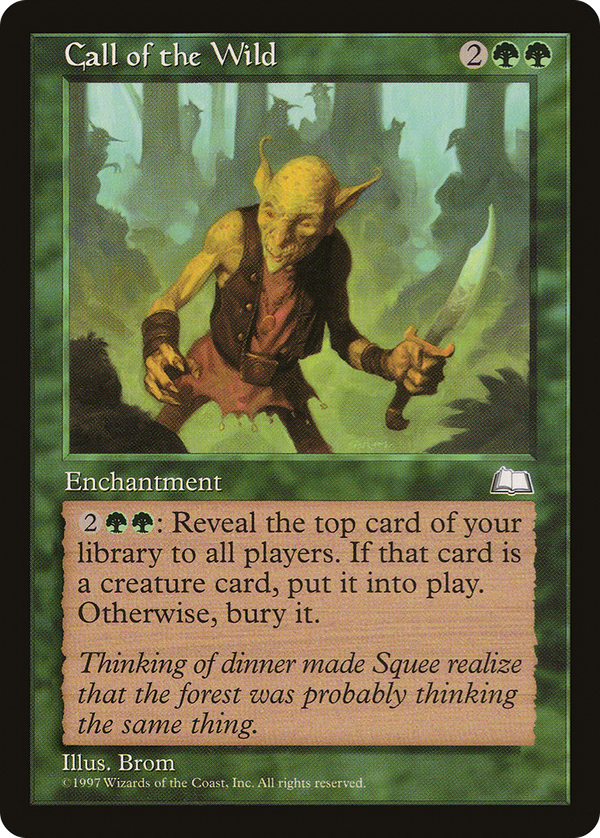
Rules text
: Reveal the top card of your library. If it's a creature card, put it onto the battlefield. Otherwise, put it into your graveyard.