Caldera Lake
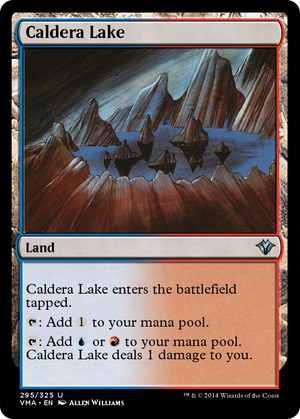
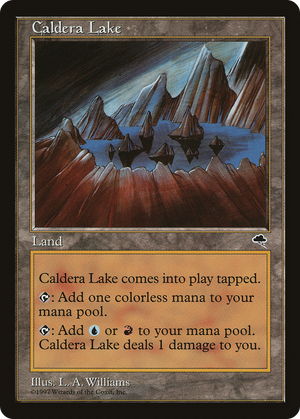
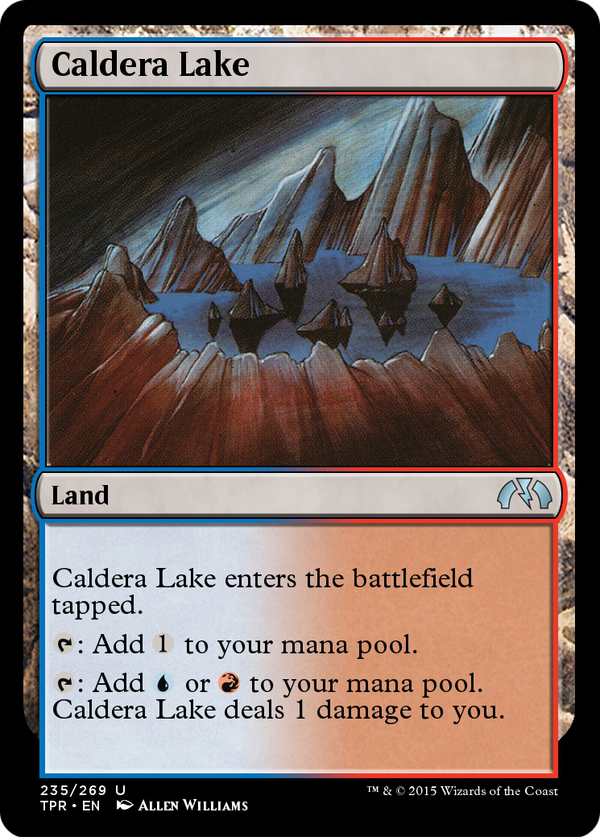
A transitional design that shows Wizards working out the price of dual lands after the original ten were ruled too strong to ever reprint. The painlands came first, charging a life per colored mana but entering untapped; this cycle inverts that bargain, layering two separate taxes on top of each other. It enters tapped, costing you a tempo on the turn you play it, and then still demands a life when you tap it for color. The generic mana is the consolation: a tap for one colorless that costs neither tempo (once it is already in play) nor life, which makes the land function as a slow, safe rock most of the time and a painful color source only when you actually need the fix. That double restriction is why the cycle never became a manabase pillar the way painlands and later the fastlands did. It is a strictly worse rate than either neighbor on the timeline, the kind of conservative cost-loading that defined this early experimental period before the design discipline settled on "pick one drawback, not three." What it documents is the moment the dual-land problem was still open: how much friction does a two-color source need to carry, and where do you put it, the tempo or the life total? Caldera Lake answers "both, badly," and the cycles that followed learned from it.
Rules text
 : Add
: Add  .
: Add
.
: Add  or
or  . This land deals 1 damage to you.