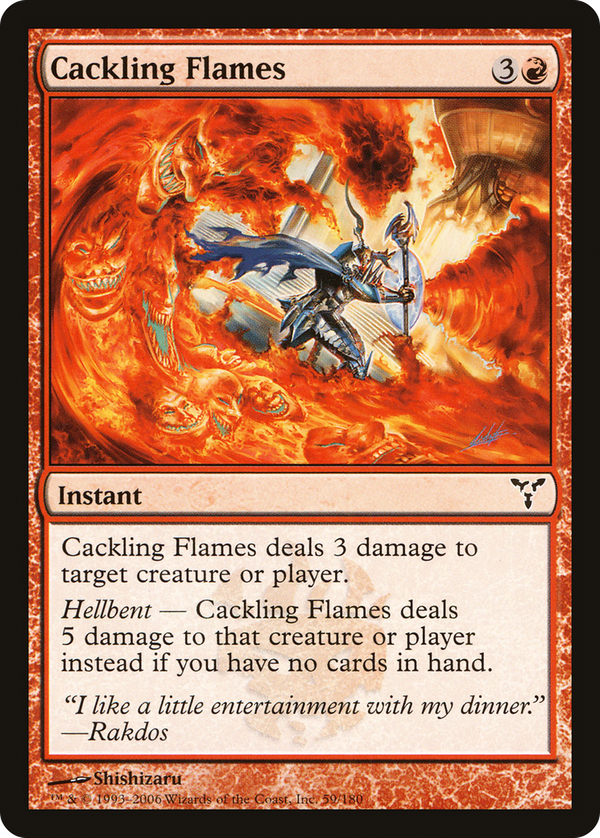
Cackling Flames


Five damage at instant speed for four mana would be a fine burn rate; three damage for the same price is well below what red was already getting in this era. Cackling Flames offers both, with the empty-hand clause deciding which one you get. That two-damage gap is the entire design: at five it kills the four-toughness midrange bodies the plain version bounces off and reaches a player's face when the game has gone long, while at three it is filler nobody plays on merit. The structure inverts the usual incentive built into card economies. Most spells reward a full hand; Hellbent pays out when yours is empty, which is the exact resource state an aggressive red shell occupies by the midgame after dumping its threats. A control deck sitting on answers can never reliably switch this on, so the card sorts itself toward decks that have already spent their resources and are hunting for reach. Read against the rest of the keyword's cycle, it illustrates the central tuning problem of the mechanic: the bonus has to be steep enough to justify maindecking an underrate spell against the chance you cannot turn it on, and a two-damage swing on a removal-or-reach instant is about the slimmest payout that clears that bar.