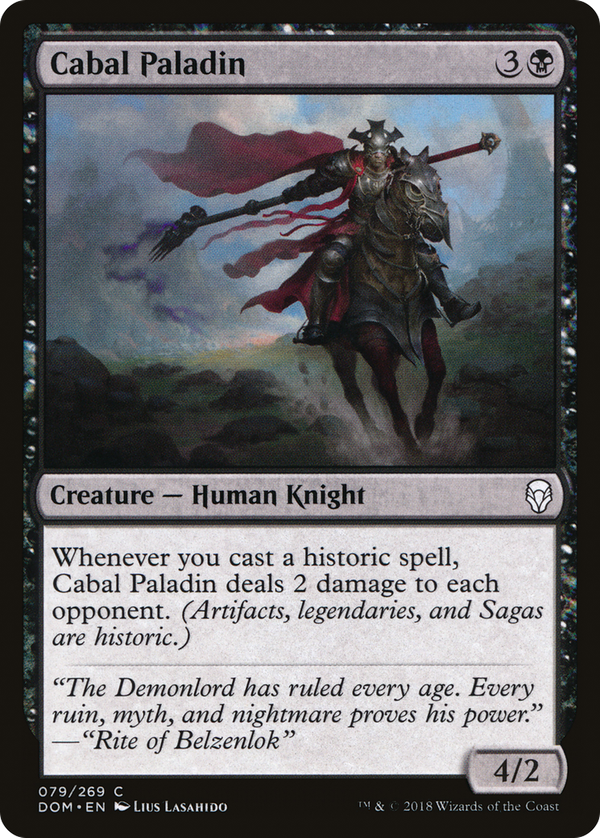
Cabal Paladin


The historic tag was the connective tissue of an entire era's block design: artifacts, legendaries, and Sagas all sharing one tribal-style label so cards could reward old-world flavor without naming a single creature type. Most of the payoffs pointed inward, converting that cast trigger into card advantage (draw a card, scry, add a counter). This one aims outward, turning the same trigger into a clock against the table. A 4/2 dies to almost everything, so the body is not the threat; the threat is the two damage that fires on cast, not resolution, so it connects whether or not the spell itself lands and whether or not the Knight survives to see it resolve. Every artifact, every legend, every Saga becomes two points to each opponent, and a deck stacked with historic cards turns a combat-irrelevant creature into a finisher that never attacks. The tension holding it back is fragility versus density: the more historic cards you jam in to feed the trigger, the less the deck does otherwise, and the easier the Paladin is to kill before the arithmetic catches up. Because it deals damage rather than draining life, it is answerable by damage prevention and by protection from black, where a life-loss version would sail through both. Where most historic rewards make your good turns better, this makes a slow, artifact-heavy build lethal on an axis that never touches the red zone.