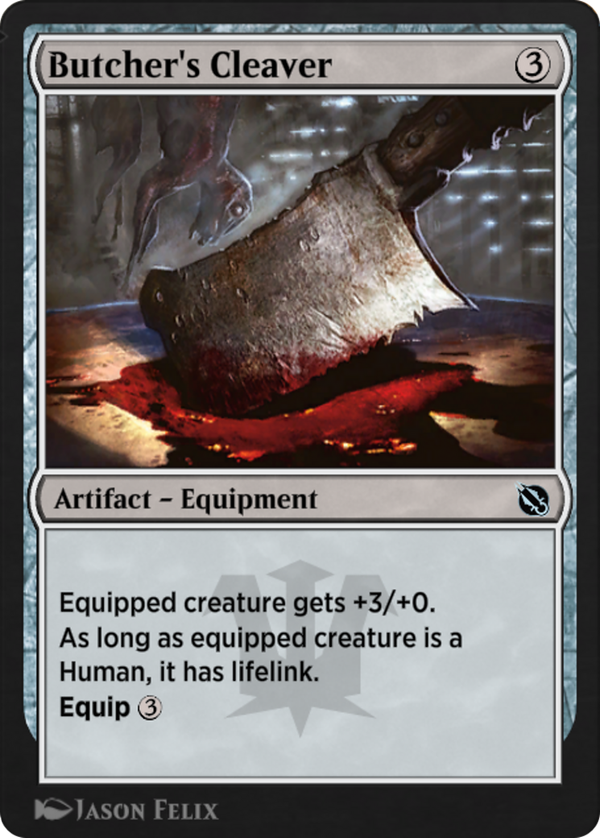
Butcher's Cleaver

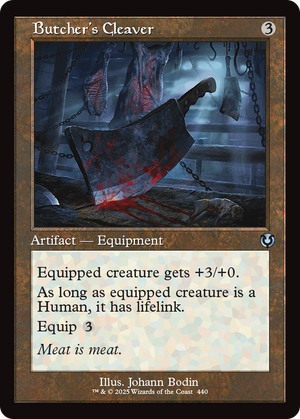
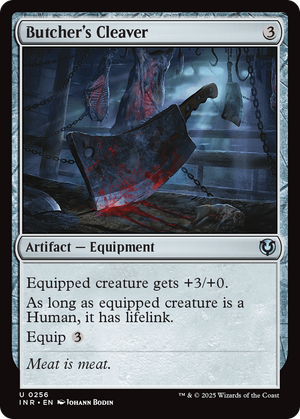
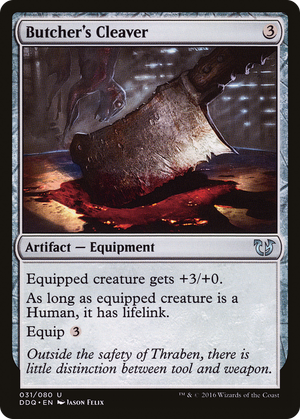
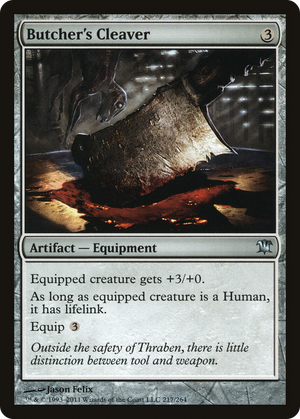
The conditional payoff is the whole design argument here. A flat +3/+0 for three mana to play and three to equip is unremarkable on its own: it makes a body hit harder and does nothing for the equip cost it asks. But strap it onto a Human and the equipment quietly becomes a stabilizing engine, turning every swing into a life swing the way an unblocked attacker rarely does on its own. That tribal gate is a clean way to reward a build commitment without taxing the rate: an aggressive Human deck pays the same mana as anyone else and gets lifelink thrown in, while a deck full of other creature types gets a serviceable but generic power boost. The lifelink-on-attack math is what makes the conditional matter, since +3/+0 means each connection drains three life off the top, fast enough to flip a damage race that looked lost. It is a design pattern that recurs whenever a set wants to nudge players toward a creature type without printing a lord: the body-agnostic floor keeps the card playable as filler, and the type-locked upside is the carrot for committing. The result is an Equipment that reads as two cards depending on what it lands on, and the gap between those two readings is exactly the incentive it was built to create.
Rules text