Burning Oil


The target restriction is the whole bargain: three damage that only lands on a creature already committed to combat, strictly worse than open-ended burn until you account for what the second cast costs. The flashback is the unusual part. Red gets the spell at instant speed up front, then white buys it back from the graveyard, a multicolor flashback that asks a Boros deck to want both halves rather than splash for one. That gold-flashback design showed up on a small handful of cards in its era, and it does specific work here: the front cast is a tempo play (ambush an attacker or punish a block during the declare step), and the rebought cast is a value play later, often two combats apart. Because both casts can only hit attackers or blockers, the card is reactive by construction; you are not clearing a sleeping creature off the board, you are taxing the act of attacking or blocking, which makes it a deterrent as much as a removal spell. And the second copy is the louder one. Graveyards are public, so an opponent can see the spell waiting and knows exactly what 
 buys back; the deterrent works precisely because it is visible. They attack into a known answer or hold back, and that overhang shapes their combat math long after the first cast resolves, which is most of what makes a strictly-reactive removal spell worth two casts.
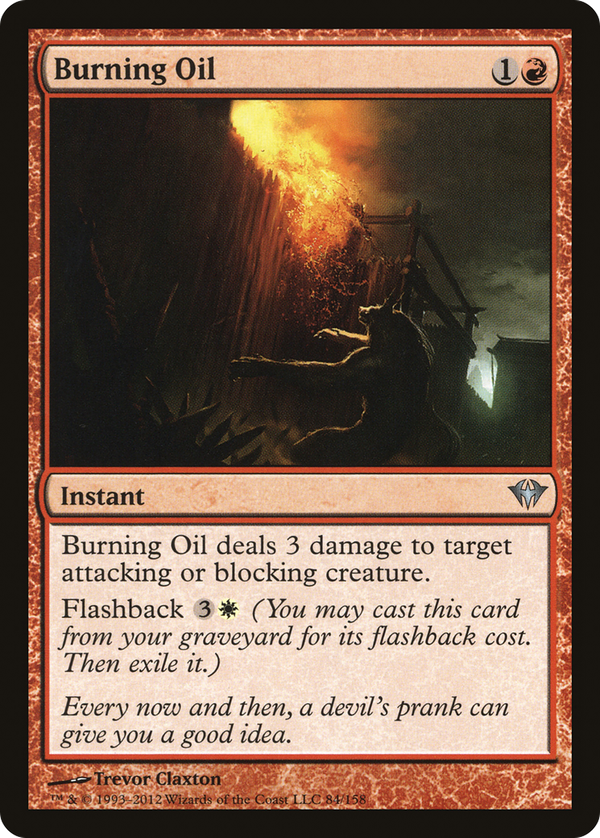
Rules text
(You may cast this card from your graveyard for its flashback cost. Then exile it.)