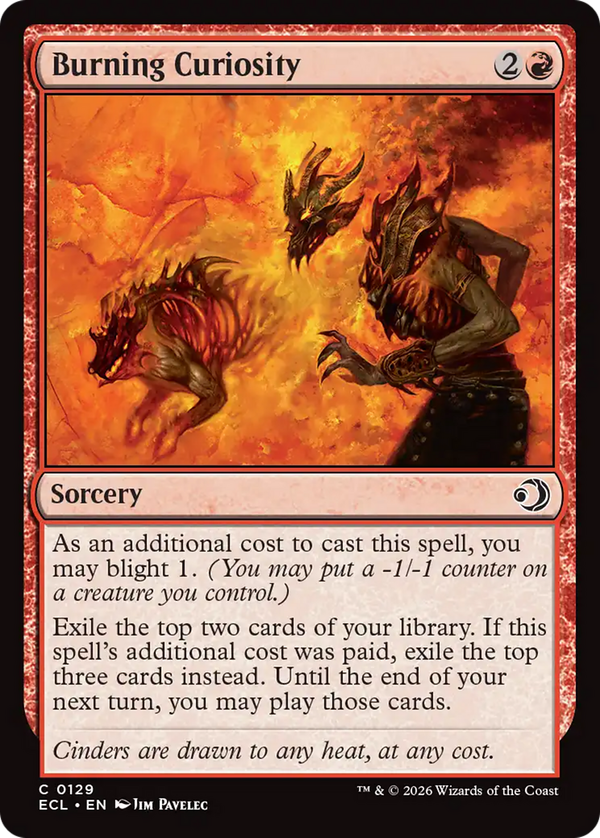
Burning Curiosity


Impulsive card advantage runs on a clock: the exiled cards evaporate if you don't spend them, so the effect trades permanence for a play-it-or-lose-it window. The wrinkle here is that the window stays fixed while the depth is negotiable. The base mode digs two cards deep and gives you until the end of your next turn to cash them in; paying the optional blight cost widens that dig to a third card without lengthening the clock. That inverts the usual card-selection math: you spend board presence to buy more cards, not fewer. The counter isn't dead motion if you route it correctly. It can erase a +1/+1 counter you no longer want, shrink a creature under a toughness-based effect, or finish off a body you needed gone anyway. But it is a genuine tax, not a free upgrade: dropping a -1/-1 counter breaks persist rather than feeding it, and pointed at the wrong body it either saps a creature you still wanted in combat or does nothing useful at all. Because the spell fires at its two-card floor with no target on board, blight is a decision, not a requirement. The design problem it resolves is how to scale an aggressive red draw effect without printing a strictly better version at higher cost: the extra card has to cost you somewhere, and here the cost lands on your own creatures.