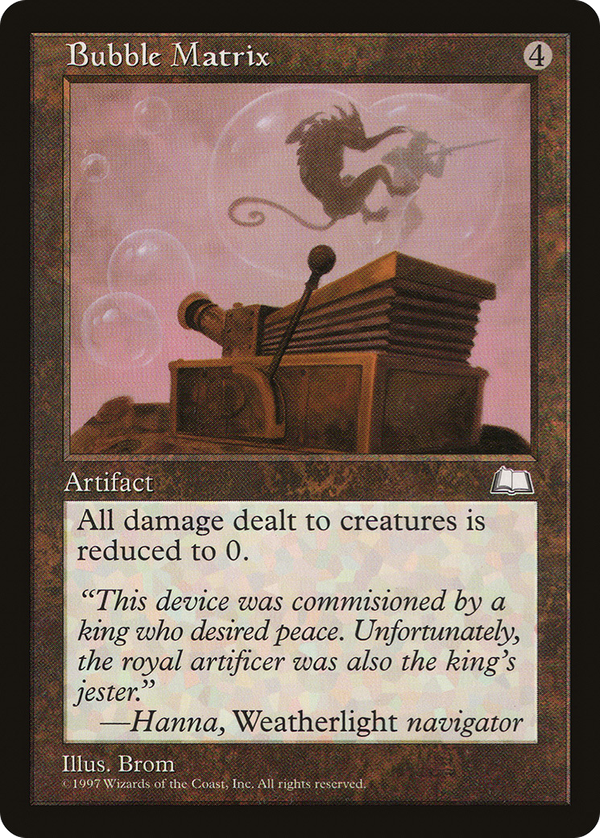
Bubble Matrix
The word that does the work here is "to." This prevents damage dealt to creatures, not damage dealt by them, and the gap between those two prepositions is the entire strategic point. Blockers cannot kill attackers and attackers cannot kill blockers, so the ground war calcifies into a wall of bodies that bounce off each other harmlessly. But an unblocked creature still connects for full damage, which means evasion (flying, fear, anything that gets past the gridlock) becomes the cleanest path to a kill. The card freezes the stalemate-prone middle of combat while leaving the through-ball wide open. It also passes burn, planeswalker damage, and any direct spell straight to a player's face, so it shields boards rather than people. The design belongs to an early period of static prevention, when Wizards was still measuring how a permanent, symmetrical lock behaves once it resolves: no upkeep, no off switch, both players bound by it equally. That symmetry is the trap. Aggressive decks that need their creatures to trade or punch through chump blocks find their plan inert, while anyone holding evasive threats, mill, or noncombat damage keeps right on winning. Compare Moat, which selectively bars non-fliers from attacking, or Maze of Ith, which redirects a single attacker per turn. Bubble Matrix is blunter and broader, neutralizing every damaging combat interaction at once while quietly leaving the door open for whoever can fly over it.