Breaching Hippocamp


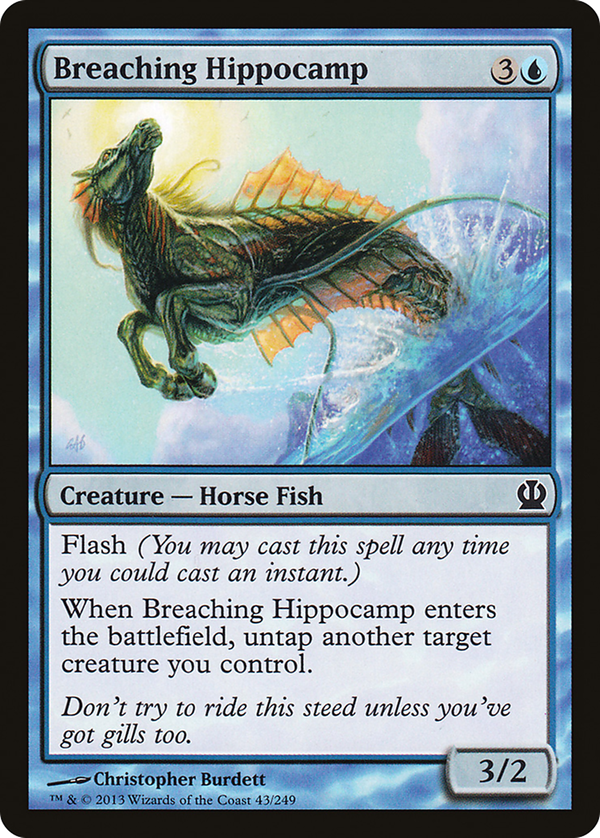
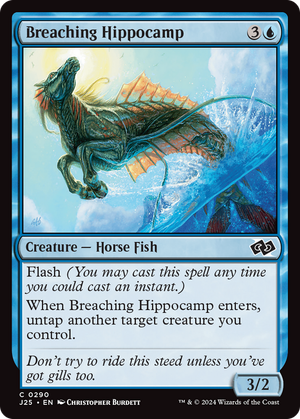
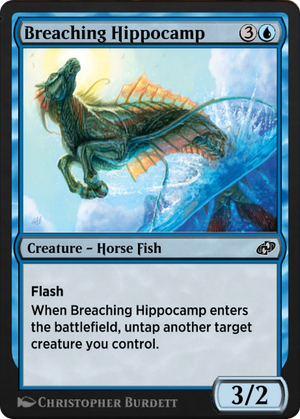
The whole card lives in the window flash opens, and the untap trigger is what makes that window pay off. Held up during an opponent's attack, the 3/2 lands as a surprise blocker, and its enters-the-battlefield trigger untaps another creature you control: most often one that attacked on your previous turn and is still tapped, suddenly free to step in front of an attacker too. One card, two bodies committed to the same combat math, and nothing in the defending player's calculus to suggest the flash body is hiding a second blocker behind it. Outside combat the untap quietly points elsewhere, at a mana creature or a tap-to-activate dork, turning the Hippocamp into a soft ritual stapled to a flash body for boards built to be activated more than once. The target clause is the wall the design builds around itself: it only ever untaps a creature you control, so it can never reach across the table to free up something the opponent left tapped. The rate is plain rather than pushed, and that is the point. The design asks two questions of an attack at once (do you have enough to break through one extra blocker, and is the flash body itself worth trading into) and charges for both with the cost of leaving four mana open on a turn you would rather have spent it.