Brass Man

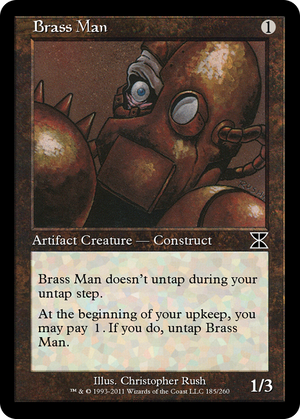
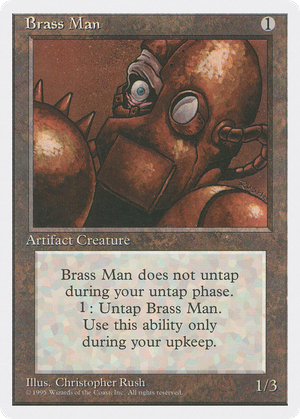
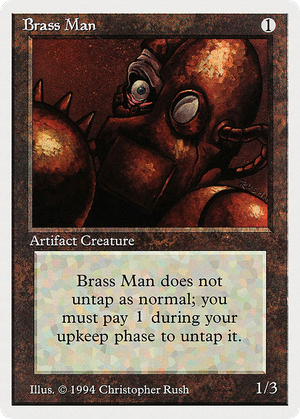
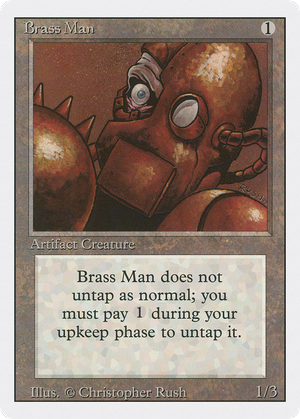
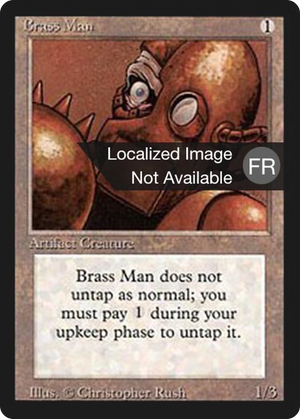
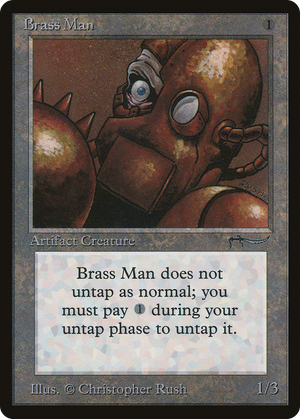
A 1/3 body for one mana was an unusual rate in 1993, when most one-drops fought for the 1/1 or 2/1 slot and toughness was scarcer than power on early creatures. The upkeep tax is what pays for it: the construct arrives ready to block, but it stays tapped after attacking unless you spend a mana on your upkeep to wake it back up. That structure splits the card into two modes. Left unpaid, it is a defensive wall for one mana that survives most early aggression and asks nothing further. Paid up each upkeep, it becomes a recurring attacker on a one-mana drip, trading a small per-turn toll for a body that keeps coming back to combat. The payment is optional, which lets the card sit on defense for free in the games where attacking is not the plan and only switch on the upkeep cost when you want to swing. Early Magic experimented often with this kind of metered creature, pricing artifact and construct bodies below curve in exchange for ongoing friction, and Brass Man is among the cleanest expressions of the pattern: a body whose rate is real but whose tempo has to be re-bought each turn you want it. A small design, but the kind that mapped territory later artifact creatures would build on.
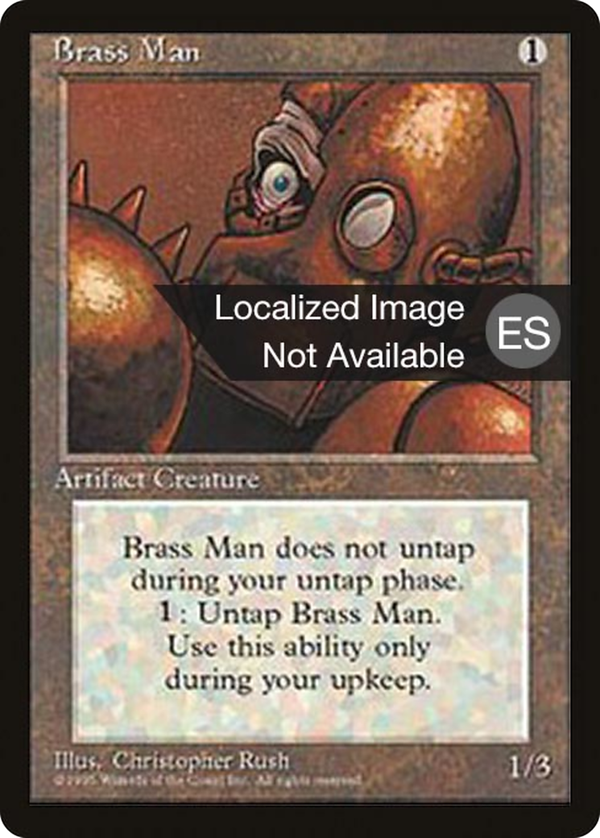
Rules text
. If you do, untap this creature.