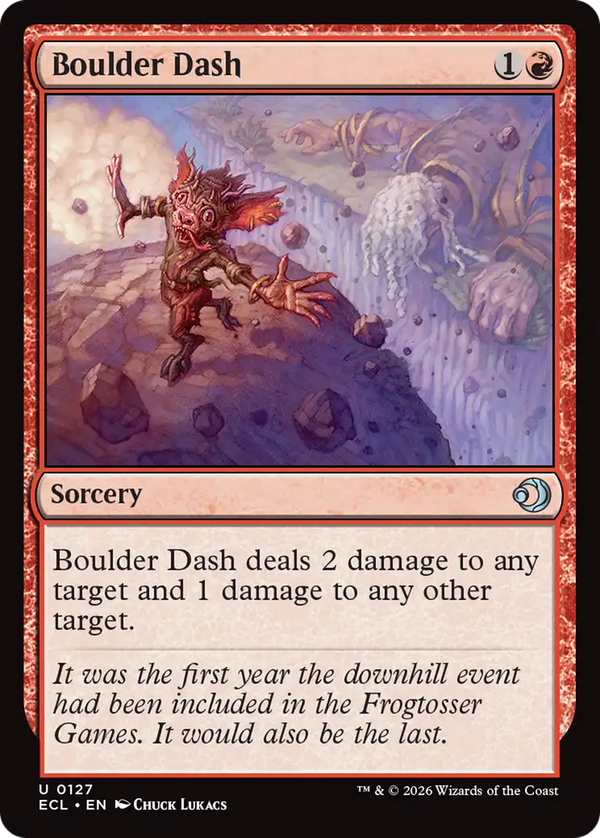
Boulder Dash


Two mana buys three damage, but it arrives split: two on the first target, one on a second, with no option to consolidate. That divided distribution is the whole balancing act. Against a single creature the spell reads as an overcosted two-damage answer; its value lives in the turns where two things need to die, or where one point of reach finishes a race. The forced second target is a real constraint. Because the text says "and 1 damage to any other target" without an "up to," you must declare two distinct legal targets: you can never pile both numbers onto one body. The out, when the board is thin, is that "any target" includes players, so a lone blocker can eat the two while the odd point goes upstairs, or you can spray both faces in a multiplayer game. Still, that is a workaround, not the design's intent. This is a fork by rule rather than by choice, closer in spirit to Arc Lightning's spread than to a clean point-and-shoot burn spell. The payoff is efficiency against the boards this kind of red deck wants to punish: paired one-toughness blockers, a two-toughness threat beside a token, an X/1 mana creature next to its controller. The card asks its pilot to find the turn where three damage across two targets beats three damage anywhere, then prices the flexibility of instant speed out entirely by staying at sorcery.