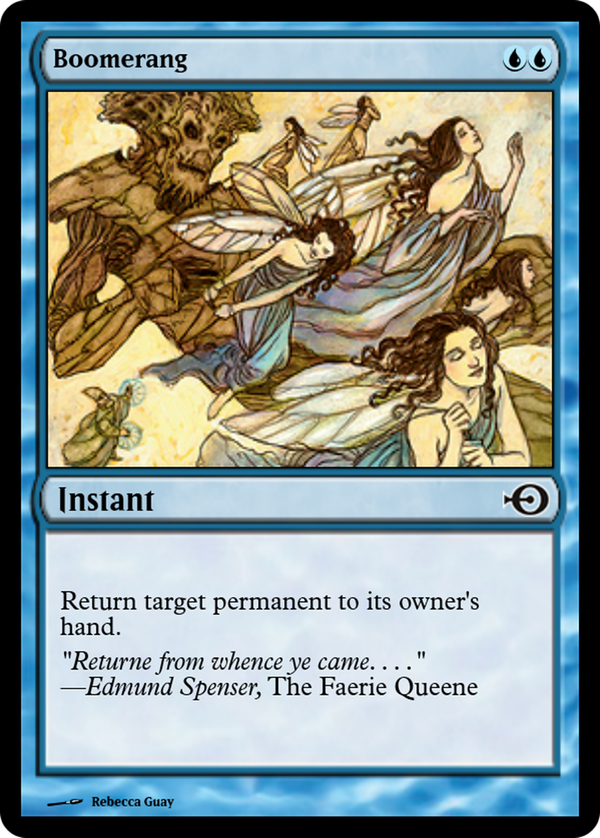
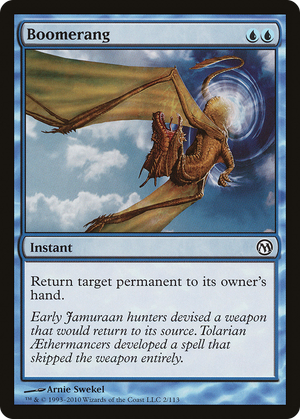
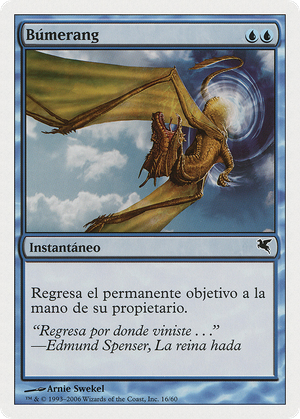
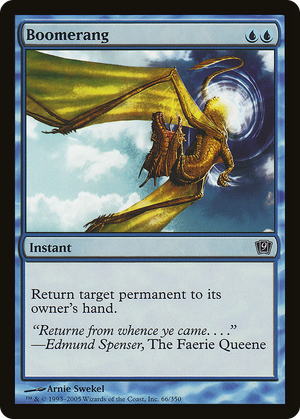
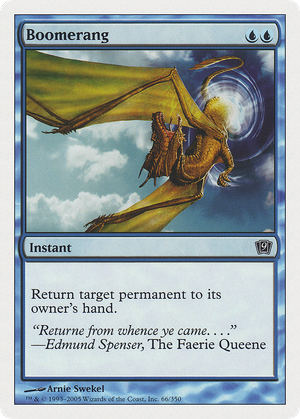
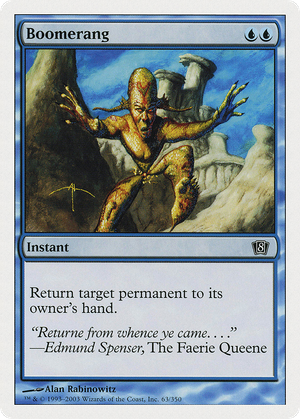
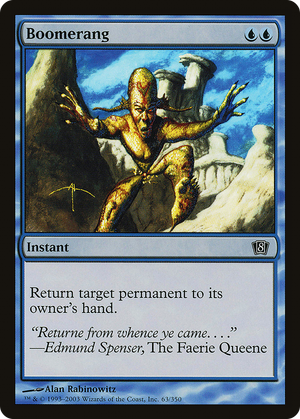
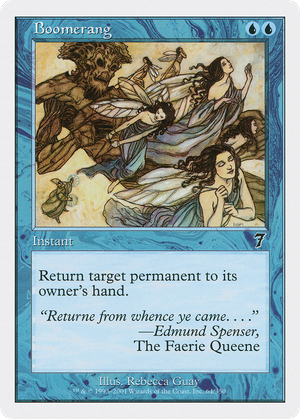
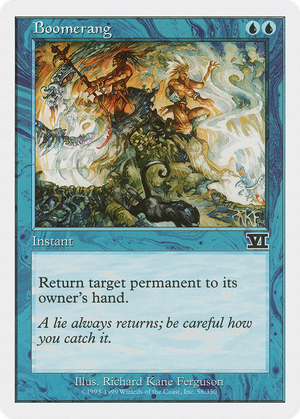
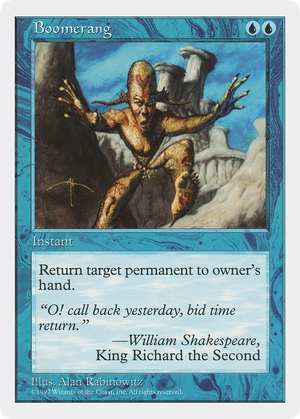
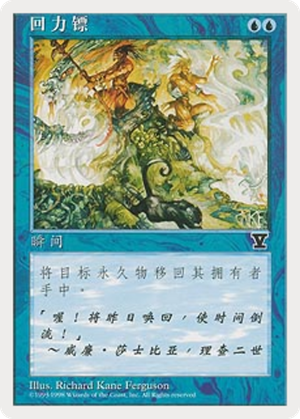
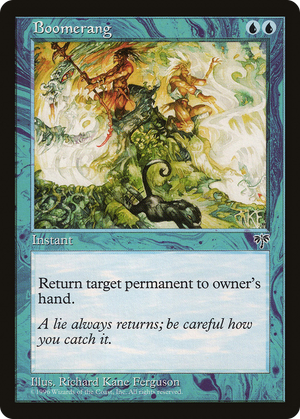
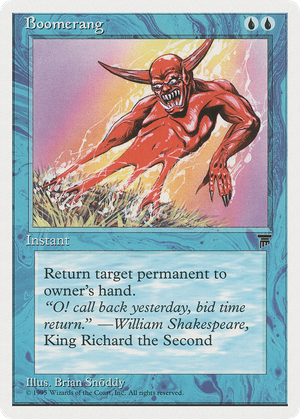
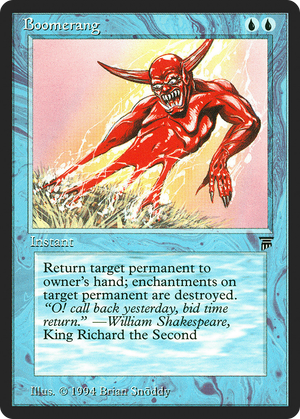
Boomerang

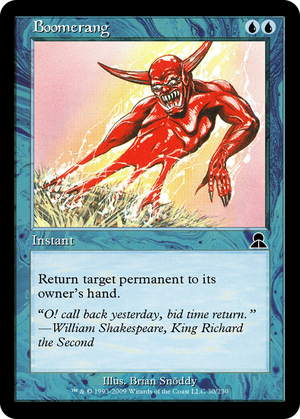
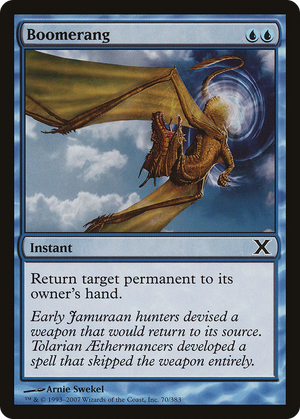
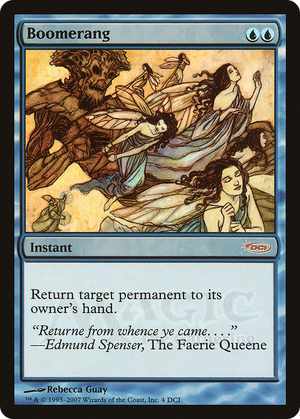
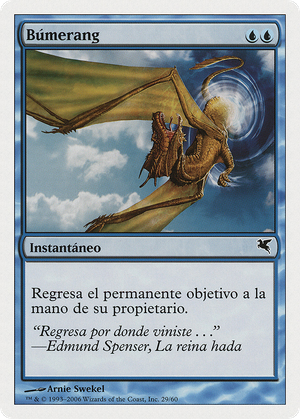
The unconditional bounce spell at two mana is the reference point for an entire family of effects, and the price has barely moved across three decades of design. Returning any permanent (a land, a planeswalker, an indestructible artifact, a creature buried under a pile of auras) is the kind of universal reach later design has carefully walked back. Unsummon narrowed the target to creatures. Vapor Snag added a life cost. Into the Roil, at the same two mana, traded away the ability to hit lands for a kicker option that draws a card. Even premium bounce like Otawara, Soaring City pays a steep tempo tax for unconditional flexibility. The design tension sits in the cost line: two blue pips for total breadth, with the bounce-back the only structural restraint, because the target rejoins its owner's hand rather than being exiled or destroyed. That clause kept the card honest in eras it might otherwise have warped, and it fixes the card's enduring strategic identity: not removal, but a tempo lever that buys a turn, resets an ETB, pulls a creature out from under a kill spell on the stack, or strands a land drop. The one wall it cannot climb is the targeting requirement itself: "target permanent" means hexproof and shroud still keep an opponent's creature out of reach, so the breadth is real but it is not absolute. The card endures as a clean utility tool precisely because everything printed after it had to justify why it was not Boomerang.