Bonny Pall, Clearcutter



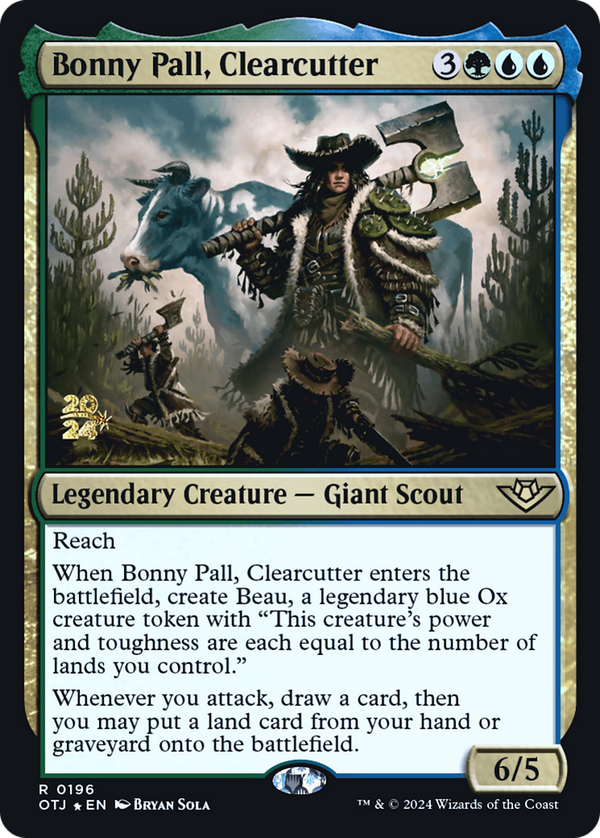
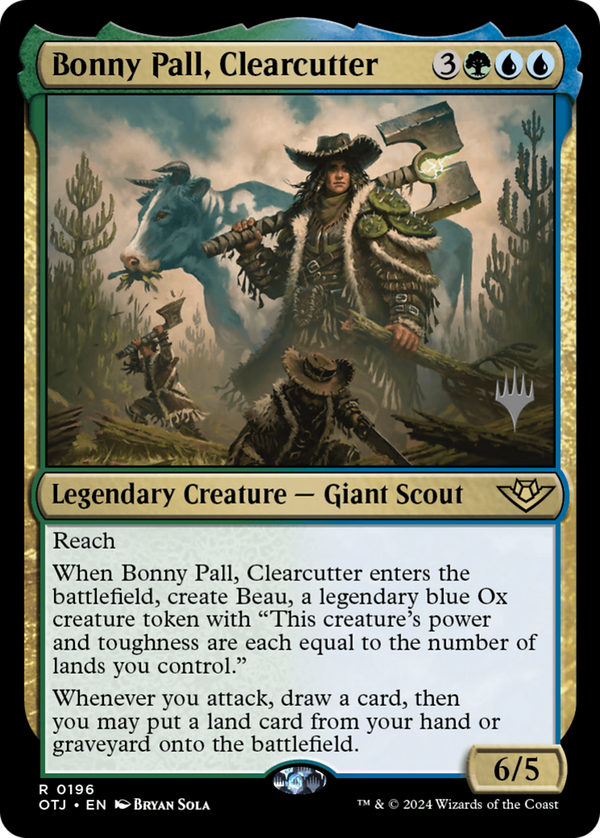
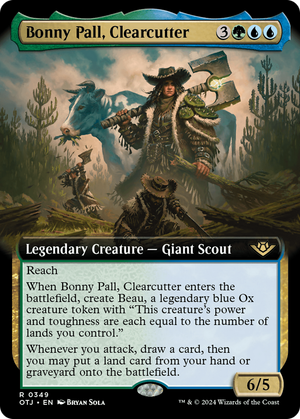
The attack trigger is the engine, and it is built to spiral. Every time you swing, you draw and then get to drop a land straight from hand or graveyard onto the battlefield. That is card advantage and ramp folded into the combat step, which quietly answers the perennial problem of the ramp deck that runs out of things to do with its mana: here the swinging is what refuels both the hand and the mana base at once. Beau ties the payoff to the same axis. A token whose power and toughness track your land count means every land you put down through the attack trigger makes your board bigger without any additional cards, so the plan reinforces itself in two directions from a single action. The design leans on a feedback loop that most ramp payoffs keep separate: draw engines and mana engines usually live in different slots, and lands-matter decks usually need a distinct win condition. Folding all of it into one attacker, with reach stapled on so the 6/5 body can also hold a defensive line, makes the card its own toolbox. The cost of that convergence is that the engine routes through combat: the recurring value only comes online once you are willing to attack, which keeps a body this loaded from simply grinding out value from a stalled position.