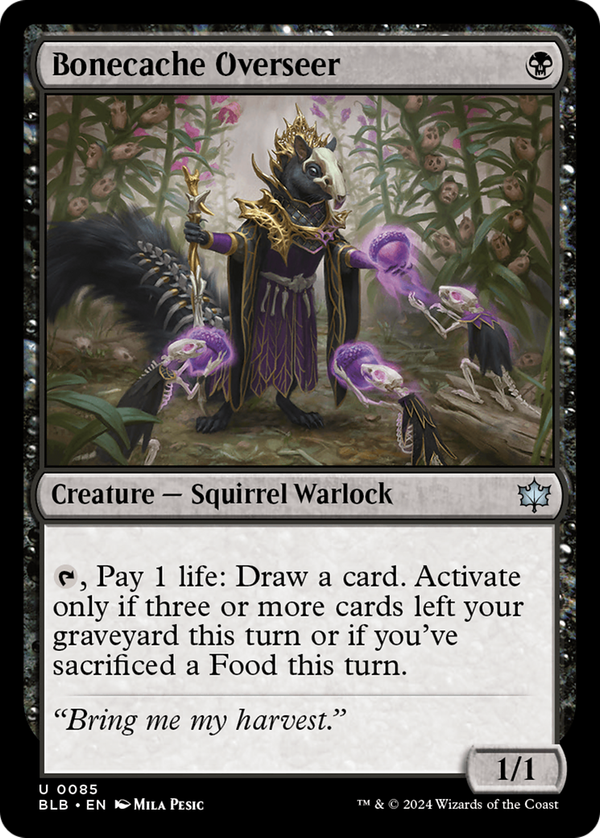
Bonecache Overseer

The gating clause is where the design lives. A one-mana body that draws a card sits far below what a repeatable card-advantage engine usually costs, so the ability comes fenced: you can only tap it on a turn that three or more cards left your graveyard, or a turn you sacrificed a Food. Neither trigger happens by accident. The first clause tracks cards leaving the yard, not entering it: exile-from-graveyard effects, delve, escape, flashback, cards cast from the yard, disturb, all the ways a black or graveyard-churn shell empties its bin rather than fills it. The second asks only that a Food died on your watch, which a Food token's own inherent ability satisfies the moment you crack it for life, no separate sacrifice outlet required. Both demand that you already committed to the plan, which means this is not an engine you draw and turn on but a payoff you build toward. The life payment is a second brake, trivial per activation but real when these draws are the only thing outrunning an aggressive clock. Each half pulls a structurally different deck: recursion-and-graveyard builds trip the three-card threshold by cashing in what they buried, while Food strategies clear the second clause without ever touching the yard. The tension resolved here is how to hand black a cheap, untapping draw engine without letting it print cards in a vacuum: a threshold that resets every turn and rewards only a deck already doing the work, so the Overseer rides the sacrifices you were making anyway instead of becoming one itself.
Rules text
 , Pay 1 life: Draw a card. Activate only if three or more cards left your graveyard this turn or if you've sacrificed a Food this turn.