Blur of Blades


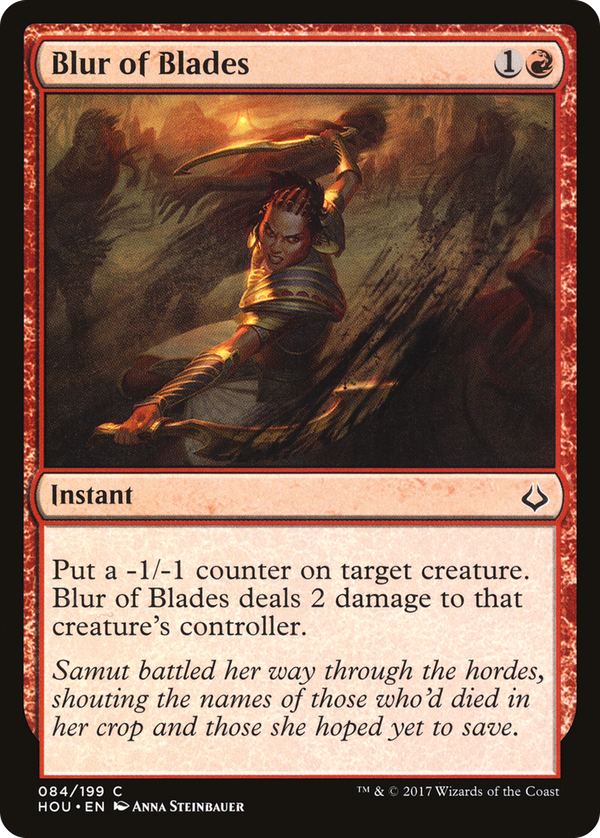
The -1/-1 counter is the half doing the structural work here. Unlike straight damage, it sticks: a creature shrunk by a permanent counter stays shrunk past the turn, it can finish off something already weakened, and it slips through damage-prevention shells that shrug off a burn spell entirely. A single counter even puts down a one-toughness indestructible body, since it lowers the number rather than trying to destroy it. Tying the two damage to the targeted creature's controller is the constraint that pays for stapling a Shock onto the back: you do not choose where the burn lands, so it cannot point at a planeswalker, an unrelated blocker, or a fresh opponent. Whoever controls the creature you just dinged is the one who takes the two. That folds both clauses into a single targeting decision rather than letting the card split duties. This kind of design came out of an era that leaned hard on -1/-1 counters as a removal currency, a wither-adjacent vocabulary in black and red that let designers price kill spells differently from the Lightning Bolt baseline by attacking toughness permanently instead of dealing transient damage. What you get is a removal spell that doubles as a small clock: trade a counter for a creature's health now, chip its controller for two as interest. The rate is modest, but the permanence of the counter and the incidental reach add up to a cleaner answer than the line suggests against recurring, hard-to-burn threats that ignore conventional damage.