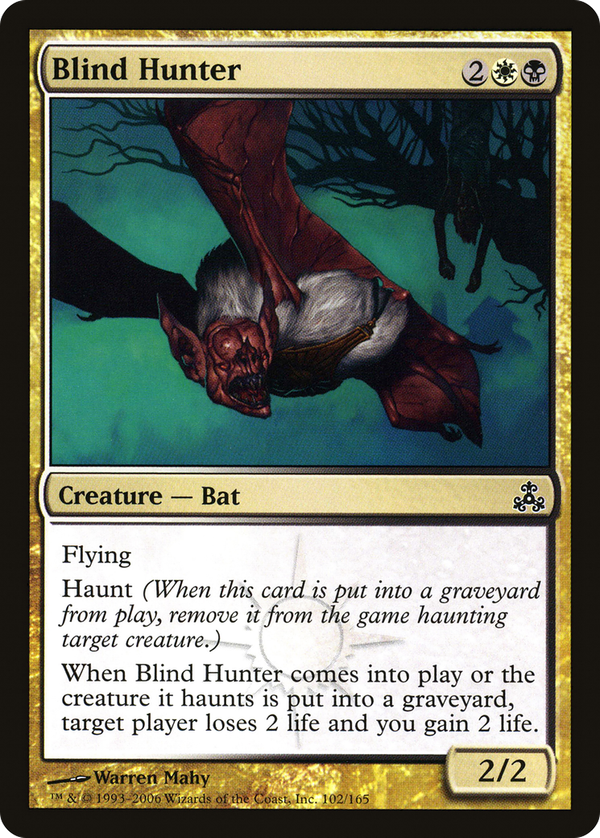
Blind Hunter



Haunt was the keyword that asked you to pay once and collect twice, and this is the cleanest demonstration of why that math worked. The drain fires when the Bat enters, then again when the creature it haunts dies, and each trigger is a four-point swing (the target loses 2 while you gain 2), so a single card promises eight life across two separate windows. The first half is immediate; the second is a deferred threat hanging over whatever you attach it to, turning the haunted creature into a liability for its controller (haunt one of your own and the swing fires when it dies in combat, haunt an opponent's and you tax their attacks). The tension haunt resolves is body-versus-effect: the 2/2 flier is a real attacker while it lives, and the death trigger means killing it does not answer the card, only delays its second payload. That is the Orzhov ethos rendered as a mechanic, a creature that drains on the way in and drains again on the way out, attrition delivered in installments rather than all at once. What keeps the back half from being free is its contingency: the haunted creature has to die for the payoff to land, so the design rewards a board where creatures are already trading rather than a stalled one where nothing dies and the second payload sits frozen in exile.