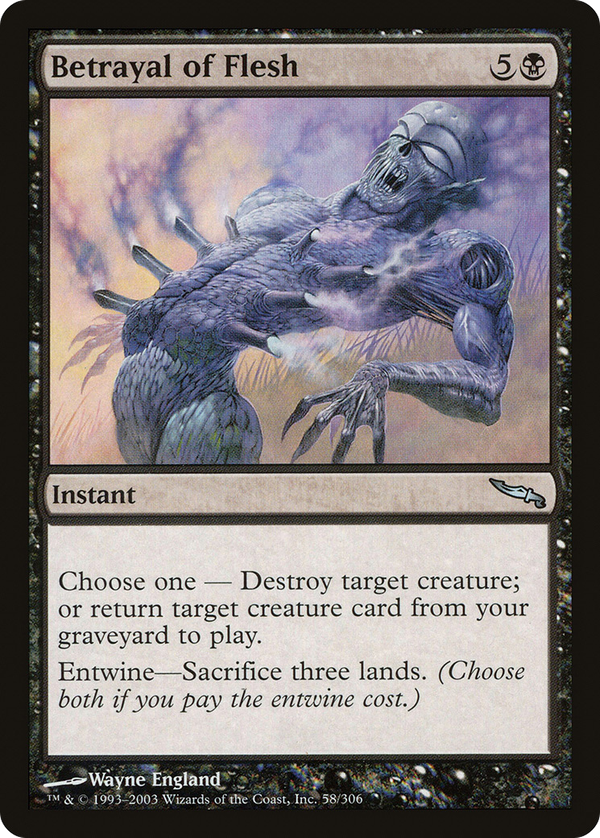
Betrayal of Flesh


Entwine was Mirrodin's answer to a perennial modal problem: how do you make "choose one" cards feel less like a tax for flexibility and how do you give a player a reason to want both halves at once? Here the two halves form a complete loop. The first mode removes a creature; the second reanimates one from your own yard. Run together for the price of three sacrificed lands, the card kills their best threat and brings back yours in a single instant-speed exchange, swinging a board two creatures at once. That land sacrifice is the cost structure doing the balancing: this is not a spell you cast on curve and forget. The entwine bill comes due in your manabase, so paying it is a deliberate late-game commitment, the move you make when you have lands to spare and a graveyard worth raising. The reanimation clause is also unusually generous for the era, returning a creature card directly to the battlefield rather than to hand, which sidesteps the recast cost entirely. Standalone, either mode is a fair (if expensive) effect: a six-mana destroy is overpriced, a six-mana reanimation merely adequate. The card's identity lives in the seam between them, in the turn where the answer and the threat are the same card.