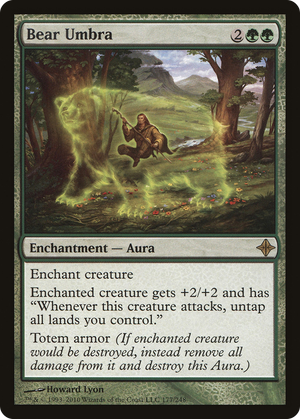
Bear Umbra


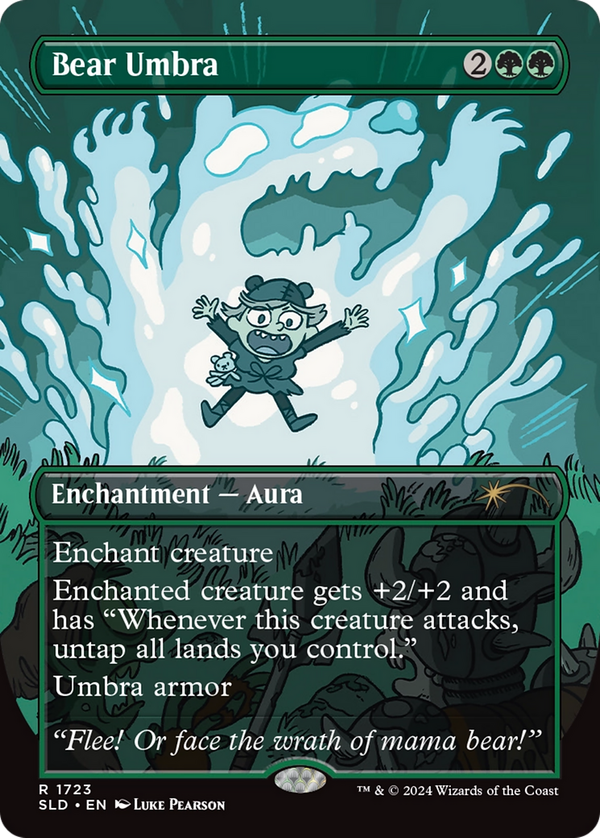
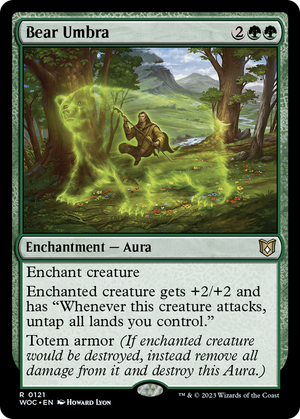
The attack trigger is the payload, and it does something most ramp can't: it untaps every land you control the moment the enchanted creature declares the attack, before blockers are even chosen. That hands you a second main phase's worth of mana on every turn you swing, effectively doubling your mana pool without asking the creature to land a hit; the trigger fires on the attack, not on combat damage. So a modest +2/+2 beater becomes the engine for casting a haymaker mid-combat, holding up a counterspell behind the swing, or dumping an X-spell after committing to it. The numbers stapled to the Aura are almost incidental; the lands are the return. Umbra armor keeps the four-mana investment from evaporating to a single removal spell: the first time the creature would be destroyed, it instead shrugs off all damage and the Aura takes the destruction in its place, so an obvious one-mana answer trades down rather than blowing out the whole package. The card's strategic identity lives in the asymmetry between what it costs to deploy and what one attack returns. Aura-based ramp is rare ground to begin with, since most ramp arrives attached to a body or a land rather than bolted onto a creature you have to protect. Bear Umbra threads that needle by folding the protection into the same card that doubles your mana.