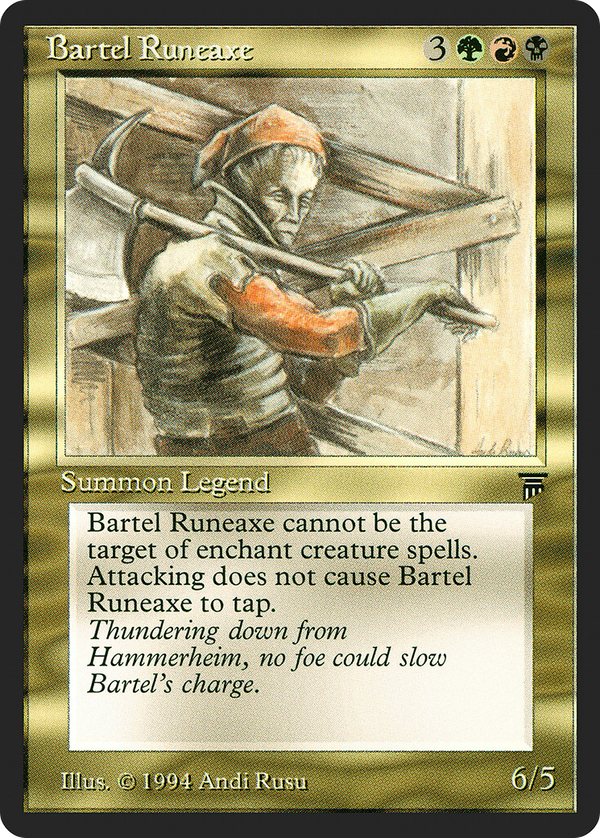
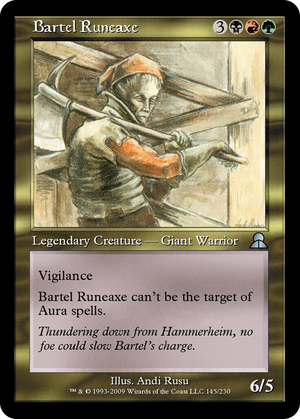
Bartel Runeaxe




The anti-Aura clause is what gives this Giant Warrior its quiet design integrity. In early Magic, the standard way to neutralize a fat threat ran through enchantments: Pacifism-shaped pacifiers and the outright theft of the Control Magic family. Writing "can't be the target of Aura spells" in the pre-keyword vocabulary draws a narrow shield around exactly that toolkit. It functions like a localized shroud rather than hexproof, and crucially it cuts both ways: opposing removal Auras bounce off, but so do your own buffs. The card is fixed at what it shows on the battlefield, no more and no less, and that self-limiting trade is what justifies a body this size for three colored pips. The mana cost gates it just as hard as the text box does. A Jund-colored legend demanding black, red, and green appeared in a set where the multicolor identity of Magic was barely sketched, and committing to three colors was as much a cost as any drawback ever printed. The body itself sits at 6/5 with vigilance, a rate that genuinely mattered in 1994: it could attack and still hold back as a wall against the era's smaller creatures. What lingers about Bartel Runeaxe is the discipline of the whole package, a creature engineered to be a clean, untouchable beater rather than a platform for tricks.