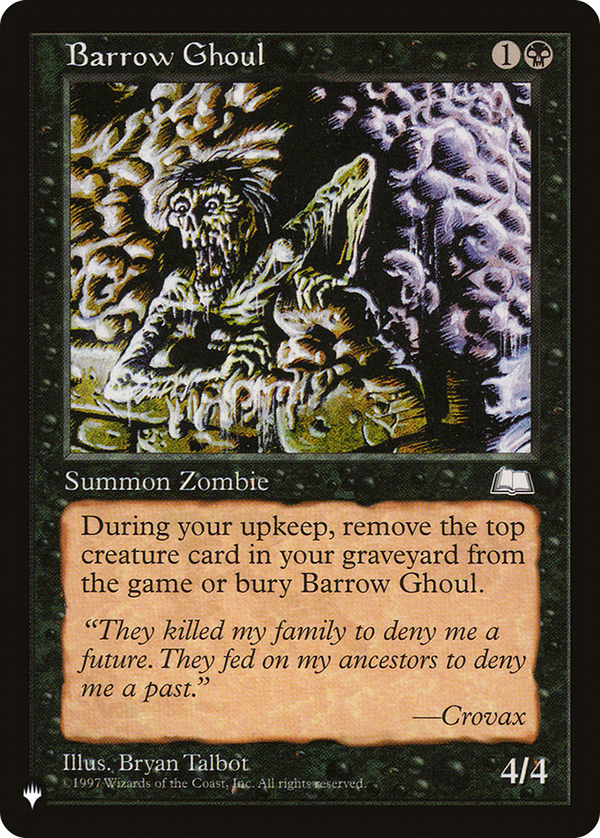
Barrow Ghoul


The body is illegal by the rates of its era, and the upkeep clause is the entire reason it could exist: every turn it demands a creature card exiled from your graveyard, or the body falls apart. That single restriction inverts the usual aggro-creature relationship to the graveyard. Most cheap beaters want to stay on the battlefield and fill the yard as they trade; this one wants a graveyard already stocked before it ever attacks, then strip-mines it one creature per turn. The card is a clock pointed at its own controller as much as the opponent: deploy it into an empty graveyard and it sacrifices itself on your next upkeep for nothing. It rewards the slower, attrition-heavy black deck that has already been trading creatures, and punishes the curve-out plan that would most want an oversized two-drop. That tension (a large body, a self-consuming fuel cost) is an early example of the design discipline that later cards built whole archetypes around: paying a recurring graveyard tax for a rate that would otherwise be unprintable. The fuel being specifically creature cards, and exiled rather than milled or discarded, also quietly shrinks the supporting recursion you can run alongside it, since each upkeep permanently removes a body you might have wanted to bring back.