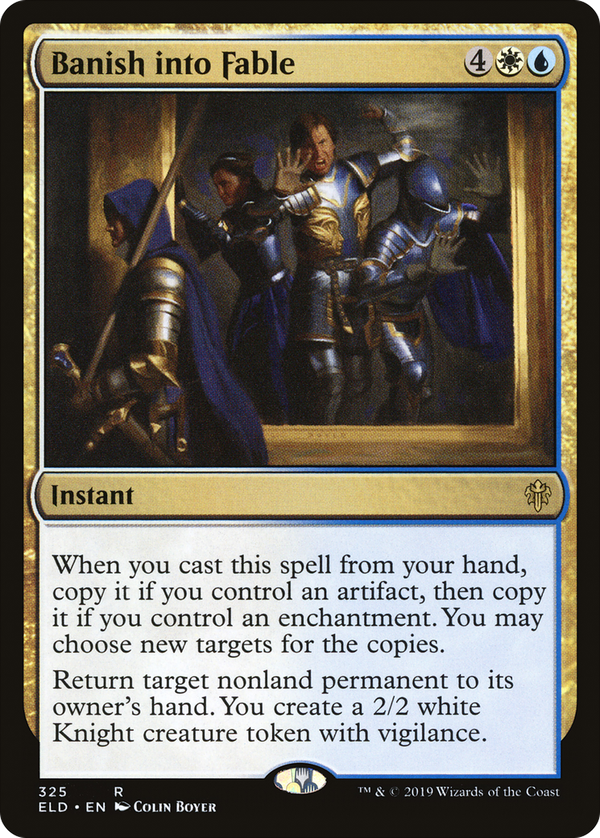
Banish into Fable



The tension in this card is between its ceiling and its floor. The floor is a six-mana bounce plus a 2/2, which is nothing to build around: you pay full retail for a tempo swing that a two-mana instant handles more efficiently. The ceiling is where the design earns its cost. Cast from hand with both an artifact and an enchantment on the battlefield, the spell copies twice, and each copy can pick a new target, turning one bounce into three permanents removed and three Knights made. That is the payoff structure the whole card is priced around: a bad instant that becomes a blowout the moment your board holds the two most common noncreature permanent types. Keying the copy trigger off casting from hand is the restriction that pays for the ceiling; you cannot rebound it, cascade into it, or hit it off a discover trigger and multiply it for free, so the fork only happens when you have already committed the six mana yourself. Bounce as removal has always been the softest kind, temporary and refundable, but multiplying it sidesteps that weakness by trading permanence for volume: sweeping three threats and leaving three blockers behind buys a full turn cycle even if everything eventually comes back. The Knights are the quiet part of the sum, converting each removed permanent into a body that both anchors the tempo lead and forces the opponent to redeploy their rebought cards into an established board.