Bag of Tricks


The dice roll is the whole gamble here, and it is a strange one to price. Most tutors that put a creature straight onto the battlefield care about what you get: an enters trigger, a keyword, a specific body. This one cares about a number you do not choose. You roll a d8, then dig for a creature whose mana value matches the result exactly, and if nothing in your deck answers that number, you whiff entirely and shuffle the reveals to the bottom. The design turns a deckbuilding constraint into the cost of admission: to make the roll reliable you have to spread your creature curve across as many mana values as possible, which pulls against the usual instinct to stack your best drops at one or two spots. Get the curve right and it becomes a repeatable cheat-into-play engine for five mana a turn; get it wrong and it is an expensive random number generator. That tension inverts the normal tutor relationship. Instead of the card finding what you want, you build a board of creatures worth finding at every result the die can produce. The green cost carries through to the activation ( ), and the whole thing leans toward big-mana strategies that already run a fat, varied top end, where any hit is a good hit and the odds of landing on a dead number shrink toward zero.
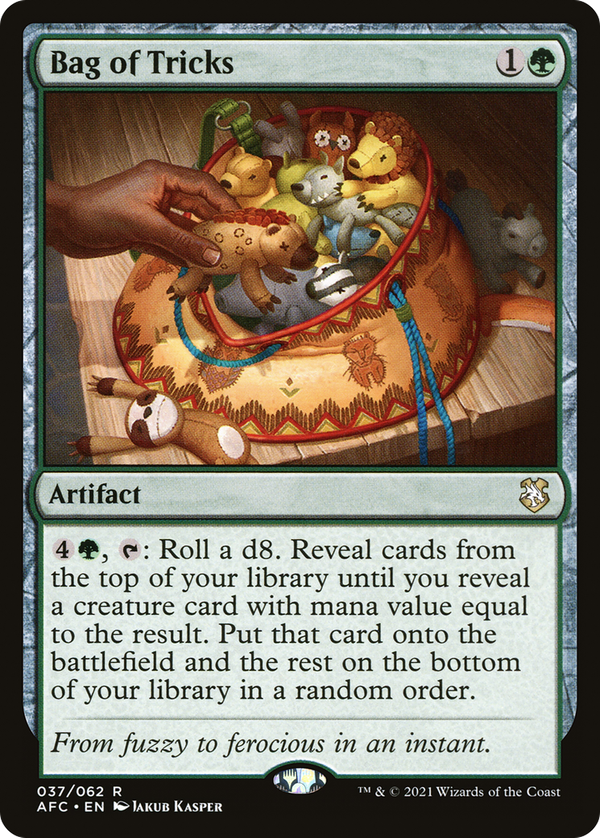
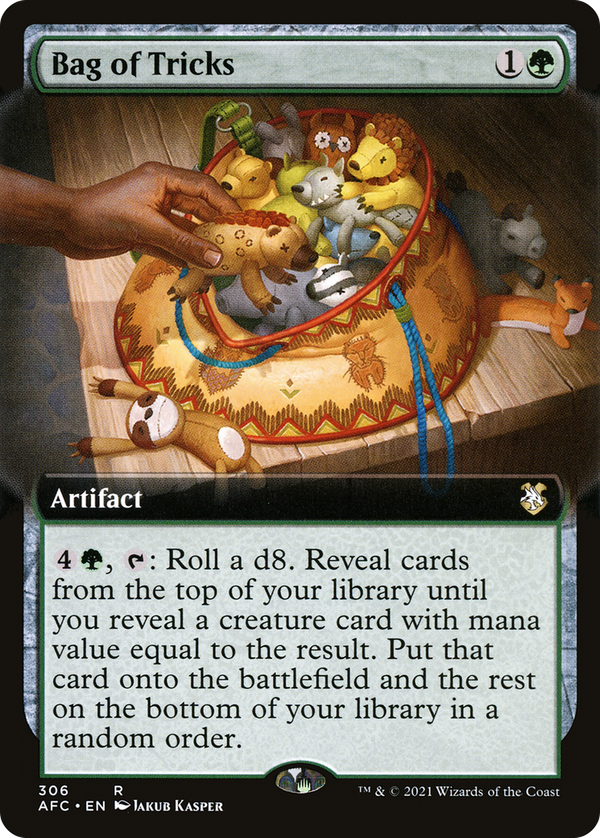
Rules text
,  : Roll a d8. Reveal cards from the top of your library until you reveal a creature card with mana value equal to the result. Put that card onto the battlefield and the rest on the bottom of your library in a random order.