Azorius Cluestone

The Azorius Cluestone occupies a specific rung on the ladder of guild fixing: a three-mana rock that taps for either of its two colors, then cashes itself in for a card once it has outlived its usefulness. The design solves the perennial problem with fixing artifacts, that they go dead in the late game when you no longer need the mana, by building in a sacrifice clause that converts the ramp into a fresh draw. That second mode is not free: it costs the two colored mana the rock was meant to supply, plus the tap, so cracking it draws on the same resources it was producing. The exchange is sequencing, not value generation; you spend early turns smoothing your curve and later turns recouping the slot. It sits in a lineage of color-fixing rocks that earn their keep by replacing themselves rather than ramping aggressively, the modest cousins of the more powerful mana sources, asked only to fix two colors and then quietly leave. The cantrip is the whole reason a deck would run this over a cheaper or more efficient artifact: it is the line between a dead card in the late game and a relevant one.
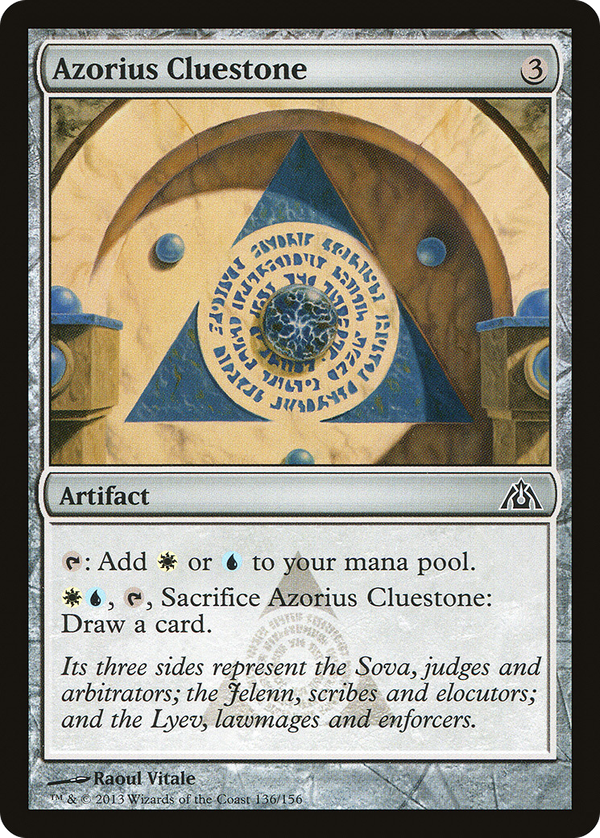
Rules text
 : Add
: Add  or
or  .
, , Sacrifice this artifact: Draw a card.
.
, , Sacrifice this artifact: Draw a card.