Ayesha Tanaka


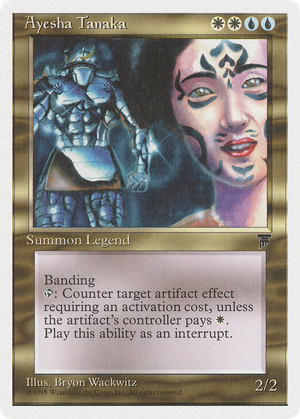
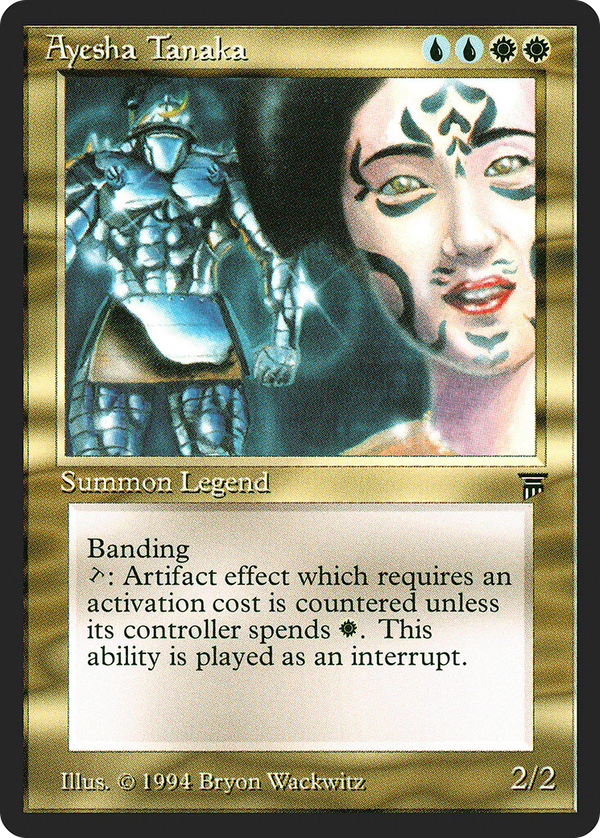
Combat math and artifact policing share a single body here, which tells you exactly how Wizards thought about colors in 1994: not as philosophies but as toolkits you could bolt together on a gold card. White contributed banding, the combat-puzzle keyword that lets a 2/2 rewrite damage distribution for whatever army she joins (and still confuses judges thirty years on); blue contributed the permission, expressed as a tap ability that taxes activated abilities from artifact sources. That second half is a Stax-flavored tax printed half a decade before Stax existed, asking an artifact player to pay white when she taps to counter a single ability off their hardware. The carve-out for mana abilities is what keeps it honest: it polices the engine without choking the resource, so it never devolves into a soft lock. The clause is a window into early metagame anxiety, when the original power-level artifacts were the boogeymen the design team wanted to fence in from inside the card pool. The cost reflects how Legends sized its gold cards: four mana of the most demanding kind, on a body that contributes almost nothing to the board it is built to protect. The bones of the design, a legendary creature that taxes a specific resource and warps combat through a keyword, are the template that later cards like Grand Arbiter Augustin IV and Thalia, Guardian of Thraben would sharpen into format pillars. She herself reads now as a museum piece rather than a build-around.
Rules text
 : Counter target activated ability from an artifact source unless that ability's controller pays . (Mana abilities can't be targeted.)