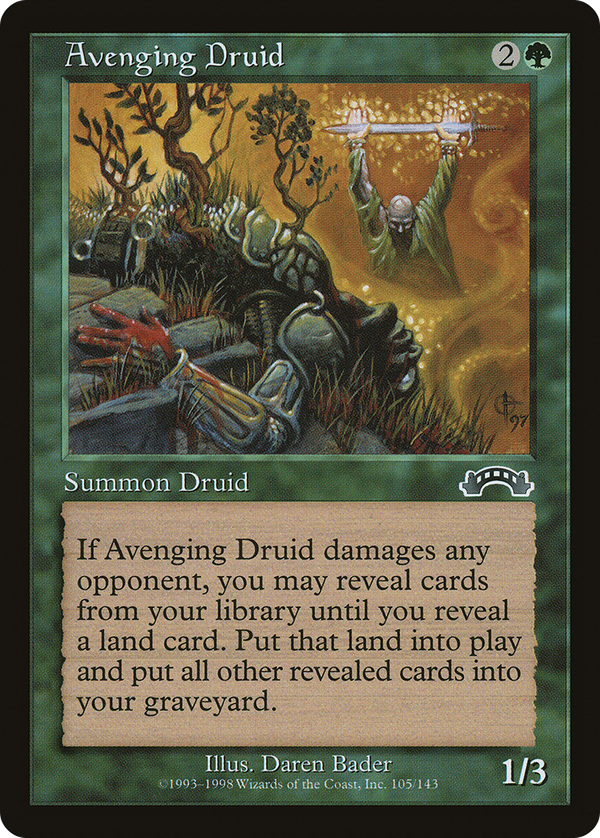
Avenging Druid


A ramp engine built on the worst possible delivery condition for a green creature: it pays out only when it deals damage to an opponent, which means a 1/3 body has to find a way through. Combat is the obvious path, demanding a swing into an open board or some form of evasion, but the trigger reads "deals damage to an opponent," not "deals combat damage," so a pinging tool like Viridian Longbow can light the engine off the table entirely. The payoff is a free land directly onto the battlefield, and the price is the milling clause: you do not choose which land you hit, and every spell stacked on top of it gets shoveled into the graveyard as collateral. The ramp itself is fixed at exactly one land per trigger no matter how the deck is built; land density only changes how many cards you bury getting there, which means the spell-dense piles that most want the acceleration pay the steepest tax for it. It sits among early creatures that tried to convert connection into a permanent rather than face damage, a lineage that mostly demonstrated why green's ramp migrated to enters-the-battlefield triggers and mana dorks that produce on schedule. The 1/3 is the honest signal: a blocker that occasionally pokes through for value, not a threat. The underlying idea (reward a connection with a free permanent, not a burn) keeps resurfacing in cleaner shells; this was the rough first draft.