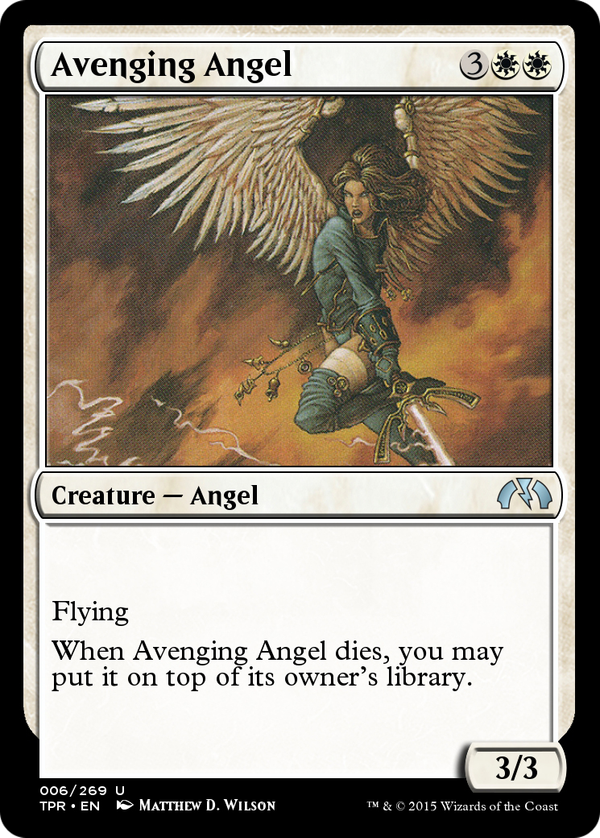
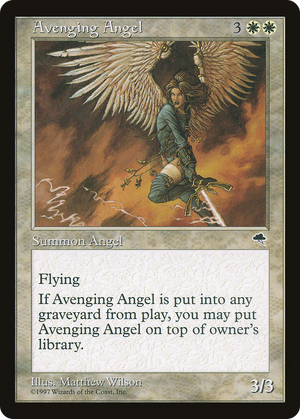
Avenging Angel


Removal answers it, but only for a turn. The body is replaceable; the death trigger is the whole design, and it turns the Angel into a threat that keeps returning past every kill spell and every chump block. The creature still dies: it goes to the graveyard like anything else, and the trigger then offers to lift it onto the top of your library rather than into your hand. That single line carries a real cost. You do not recast a card you already had; you spend your next draw on the recursion, trading a turn of card velocity for the body's permanence. The tuck narrows what you can find next, since the redraw is a card you would otherwise have used to dig deeper. The "you may" matters, because when the top of your library is worth more than another copy of the same flyer, you can leave it in the graveyard and move on. What makes the loop elegant is where the answer lives: the resilience is wired into the creature itself, not bolted on through a reanimation cost or a graveyard engine. There is no exile clause for the opponent to play around and nothing to recur it with; you simply pay a draw step forward and put the burden back on them to find the next removal spell, and the next.